
We recommend reading the engineering guide for selection criteria and project-specific validation points. Download Engineering Guide (PDF).
Flat Wire and High Current Inductors
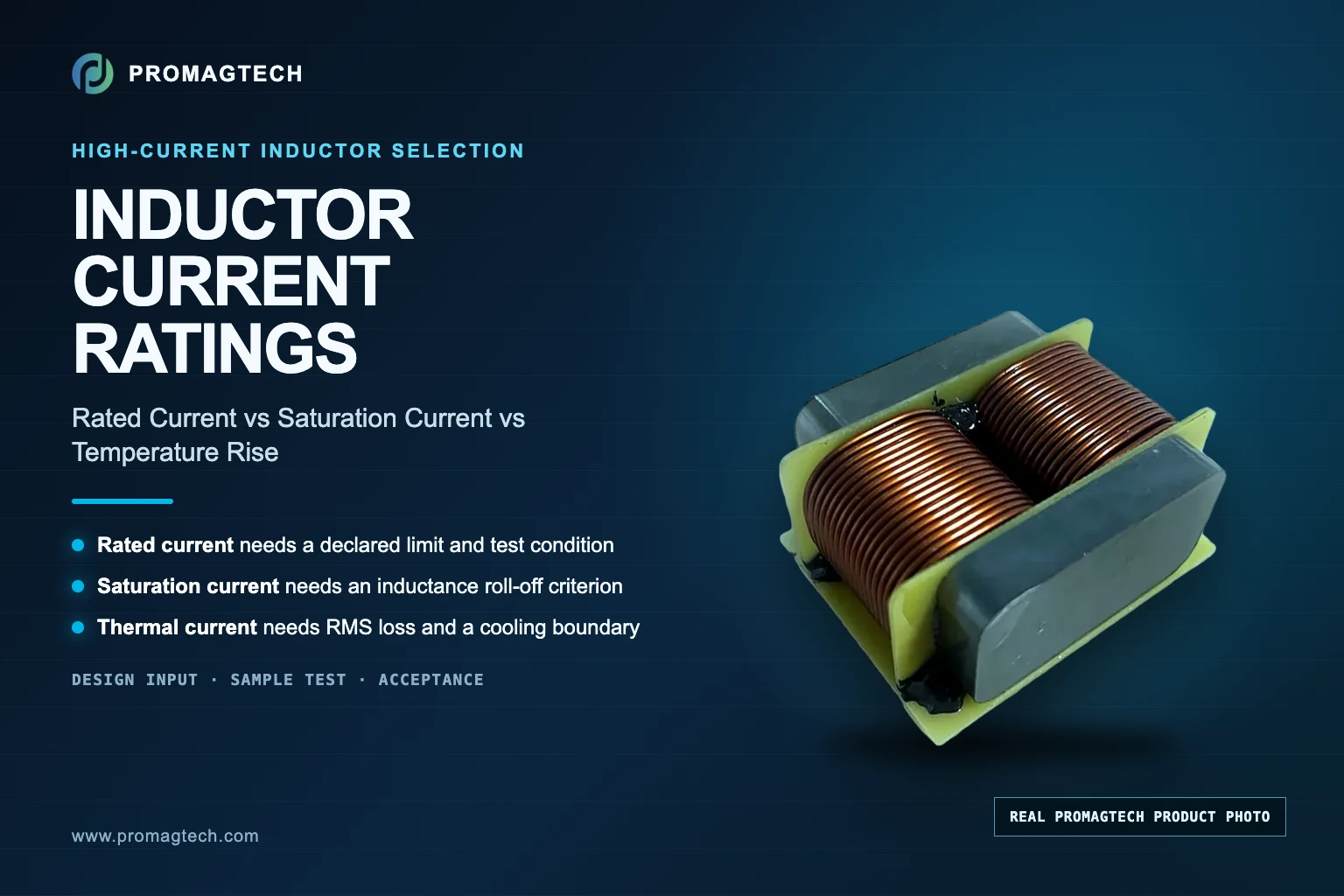
Rated Current vs Saturation Current vs Temperature Rise
Separate RMS heating, peak-current inductance roll-off, ripple loss and cooling boundaries before selecting a high-current inductor.
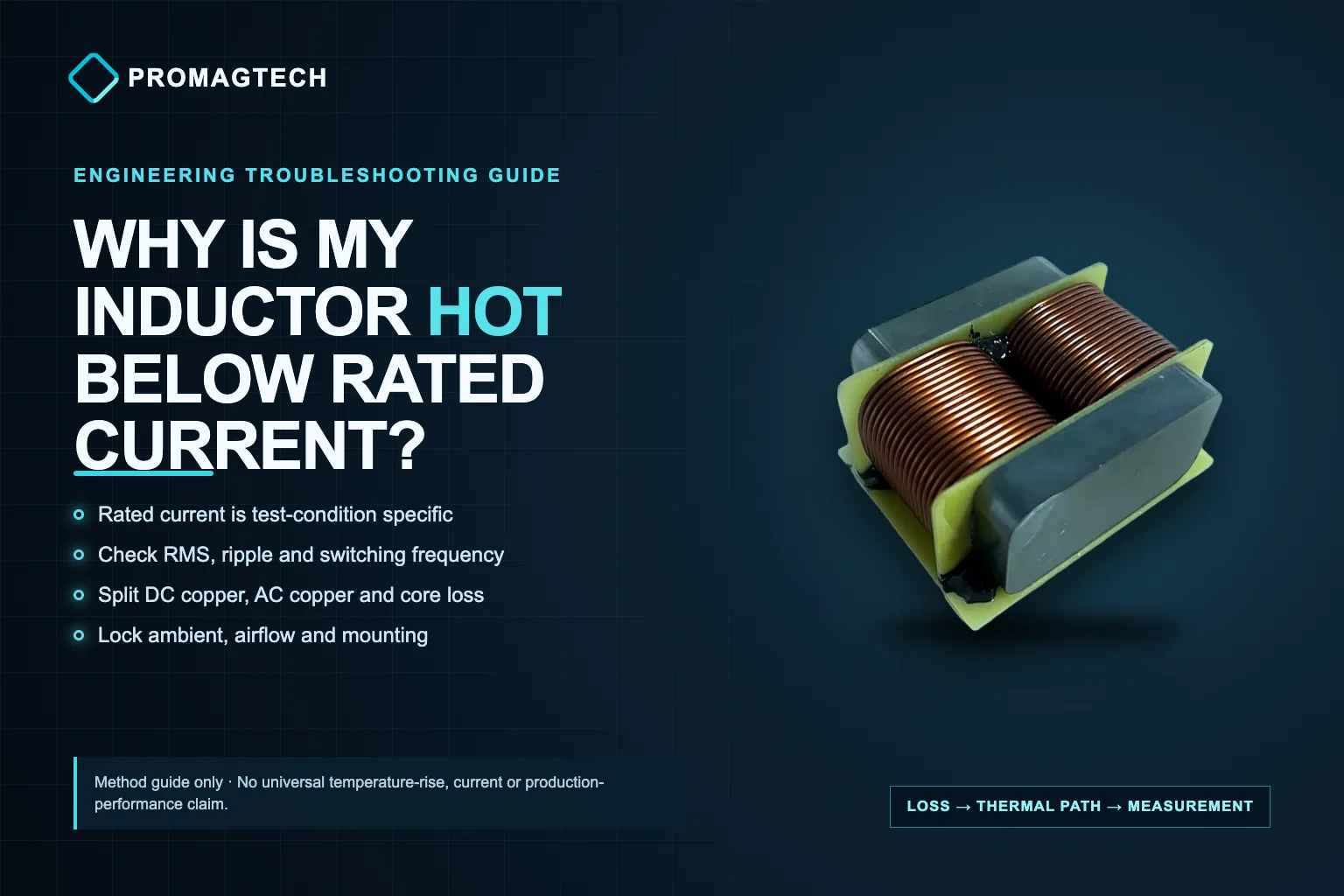
Why Is My Inductor Hot Below Rated Current?
Check rating conditions, RMS and ripple current, AC copper and core loss, hot DCR, thermal path and measurement method.
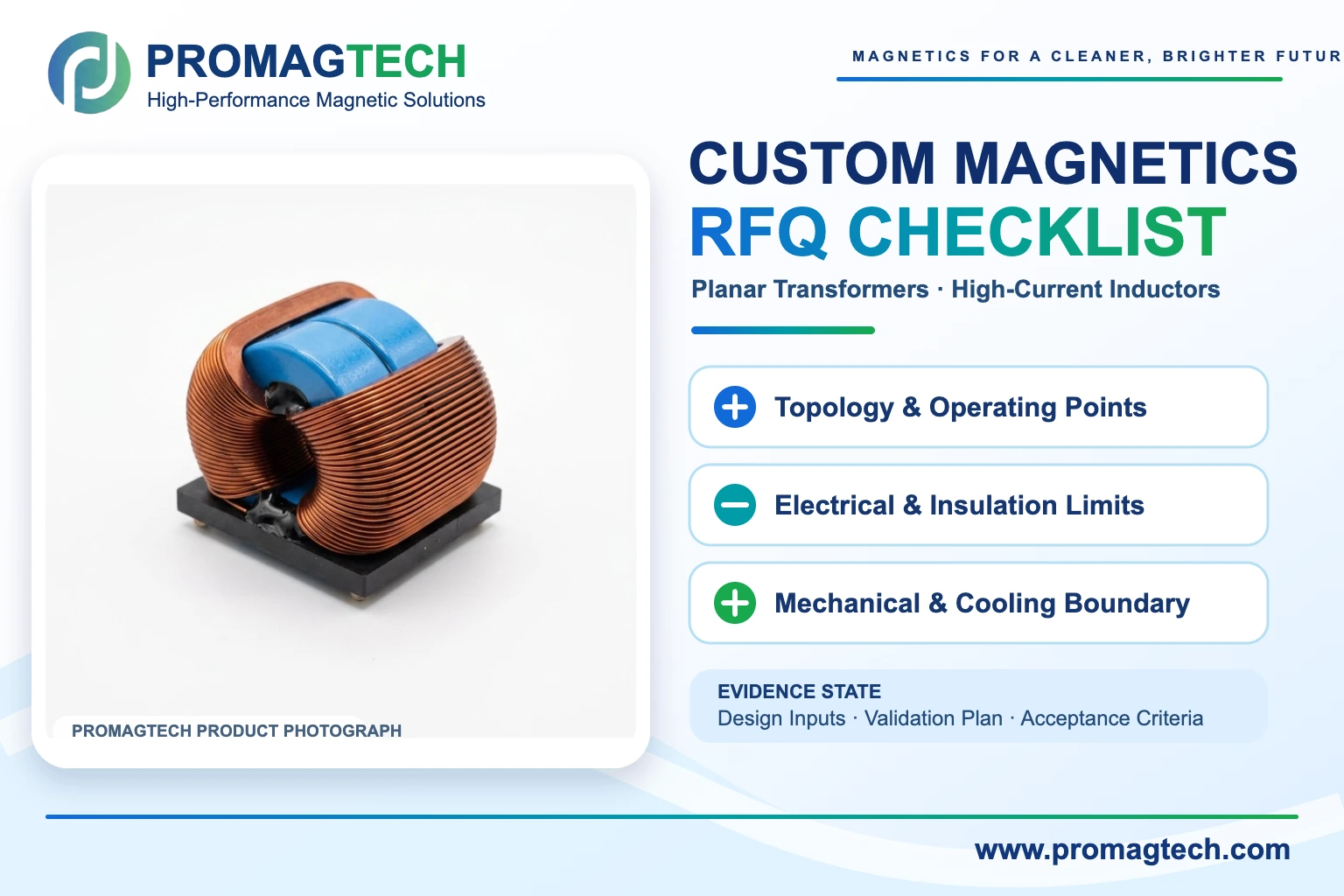
Custom Magnetics RFQ Checklist: Planar Transformers and High-Current Inductors
Send topology, operating points, waveforms, electrical targets, insulation, mechanics, cooling and validation criteria in one engineering-ready input package.
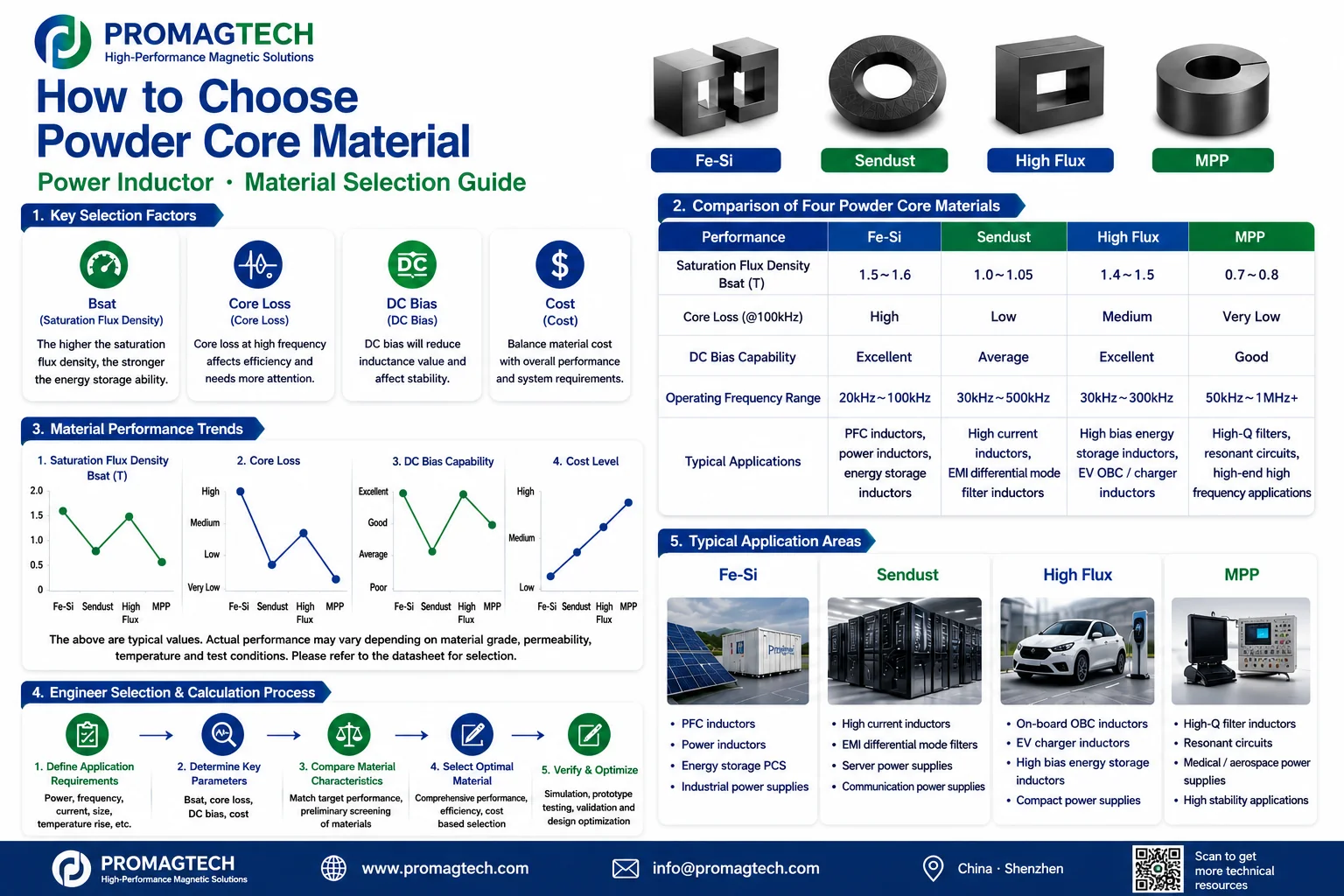
Choosing a Powder Core: Fe-Si, Sendust, High Flux and MPP
Compare saturation flux density, core loss, DC-bias retention, temperature stability, cost and application boundaries for PFC, high-current, filter and resonant inductors.
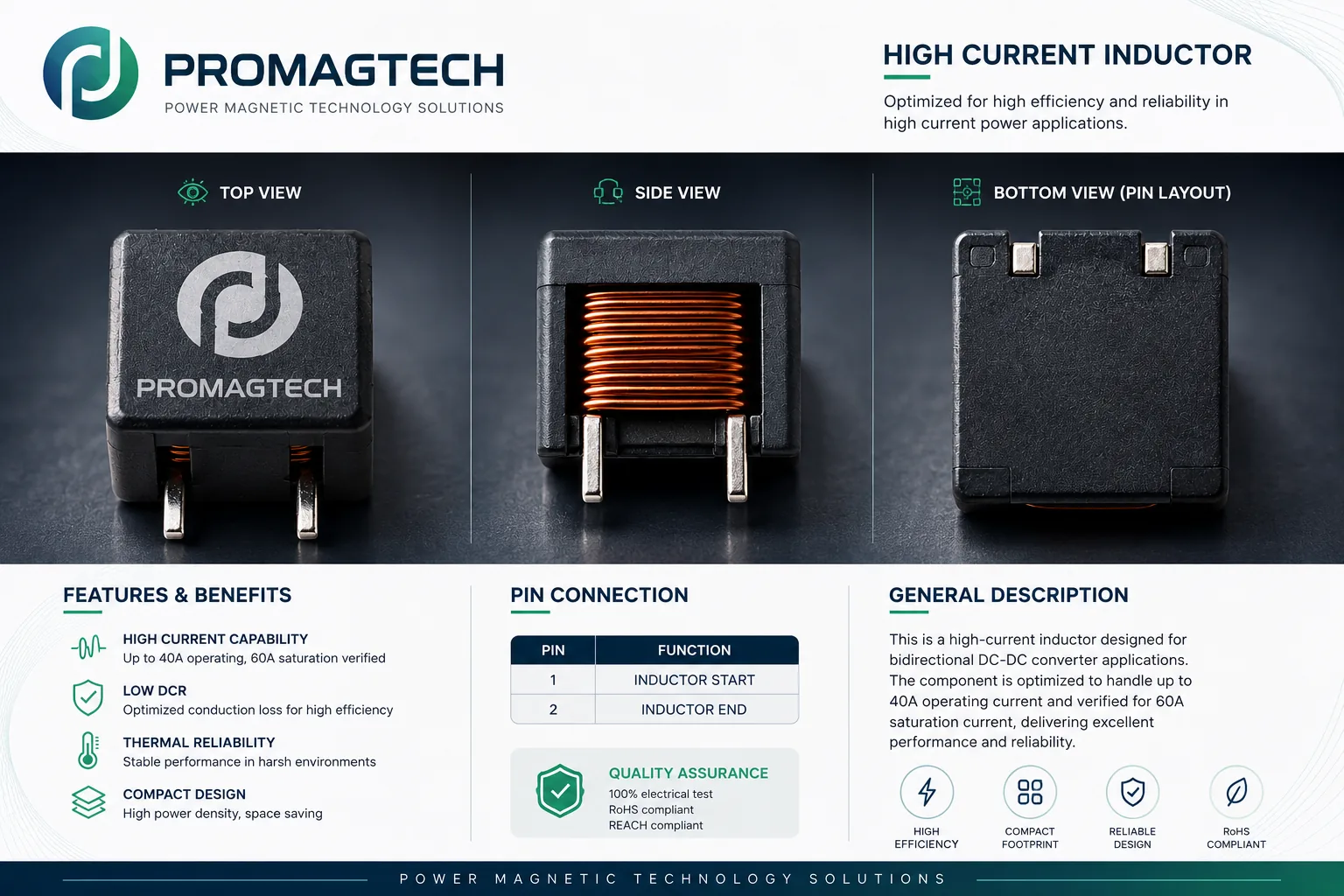
120 V / 40 A / 66 kHz High-Current Flat-Wire Inductor Design Case
Review a buyer-private, anonymized design case covering DC bias roll-off, EQ32 Fe-Si core behavior, compact mechanical envelope, insulation and sample-stage checks.
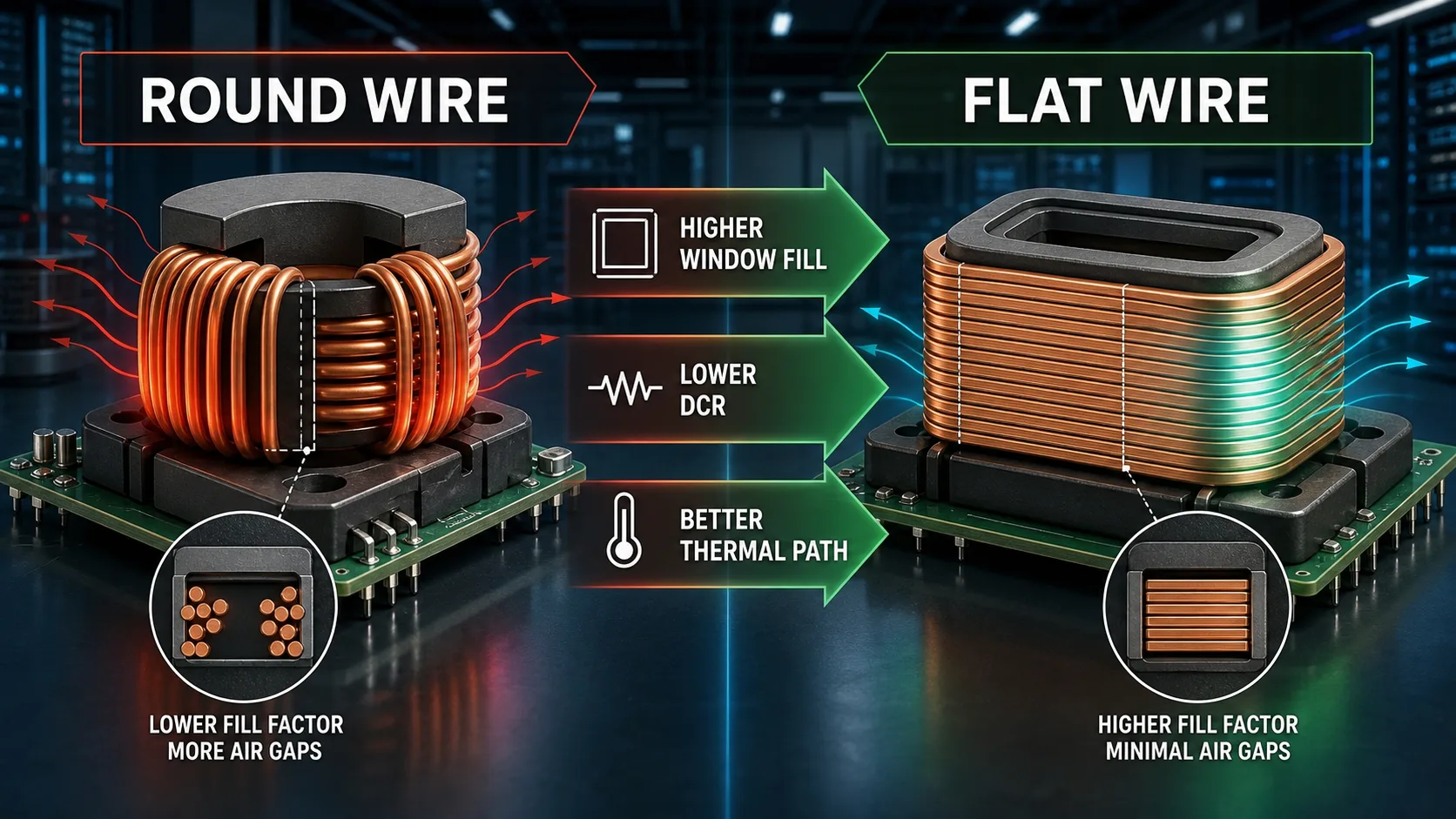
High Power Density White Paper: Round Wire vs Flat Wire Magnetics
Compare round-wire and flat-wire magnetic components for window fill, AC loss, thermal path, production consistency, and high-density power design.
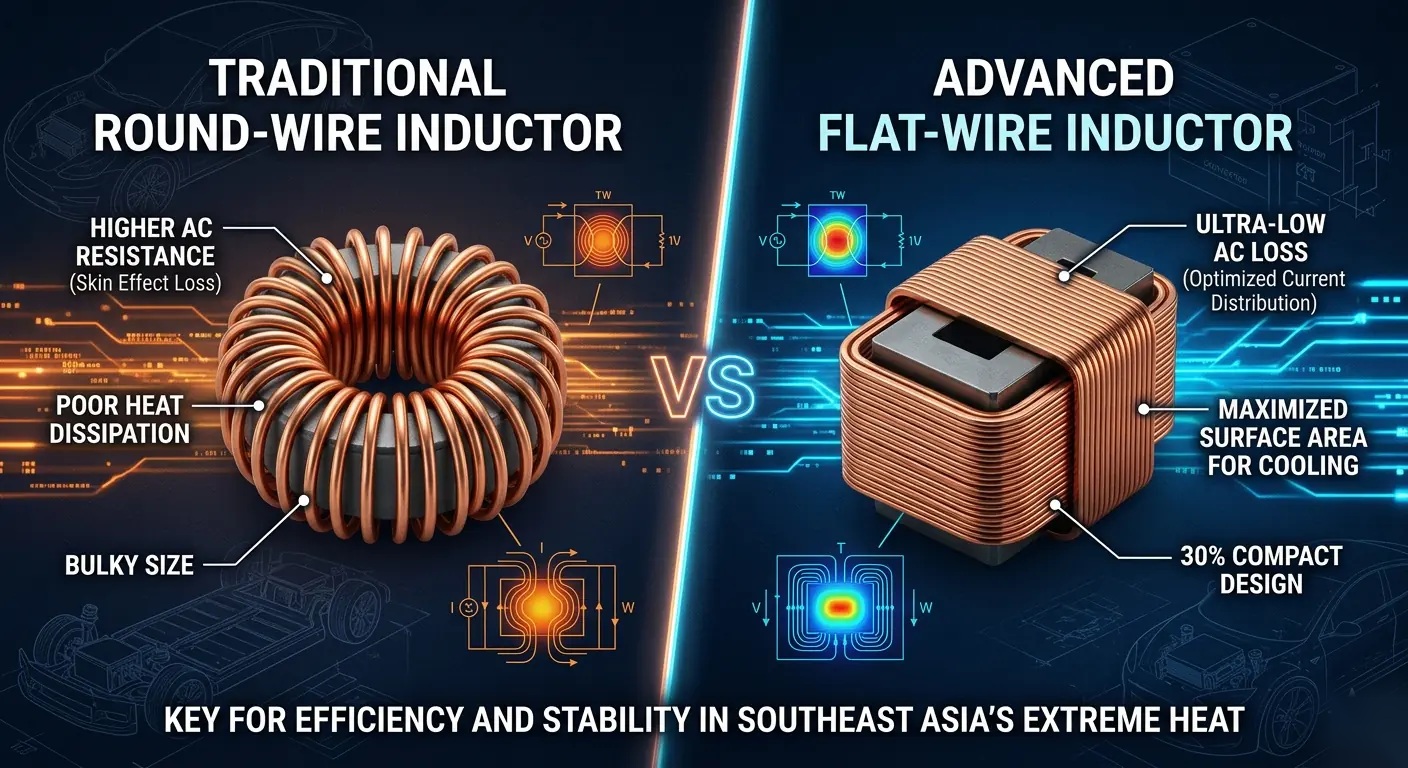
Flat Wire vs Round Wire Inductors: How to Choose?
Compare flat-wire and round-wire inductors under the same core, turns, waveform, conductor temperature and cooling boundary using measured DCR, AC loss and temperature rise.

How Do You Design a 500 A High-Current Inductor?
Review a 500 A inductor from current definition and magnetic circuit through winding geometry, loss, cooling and sample validation.
PFC and Boost Inductors
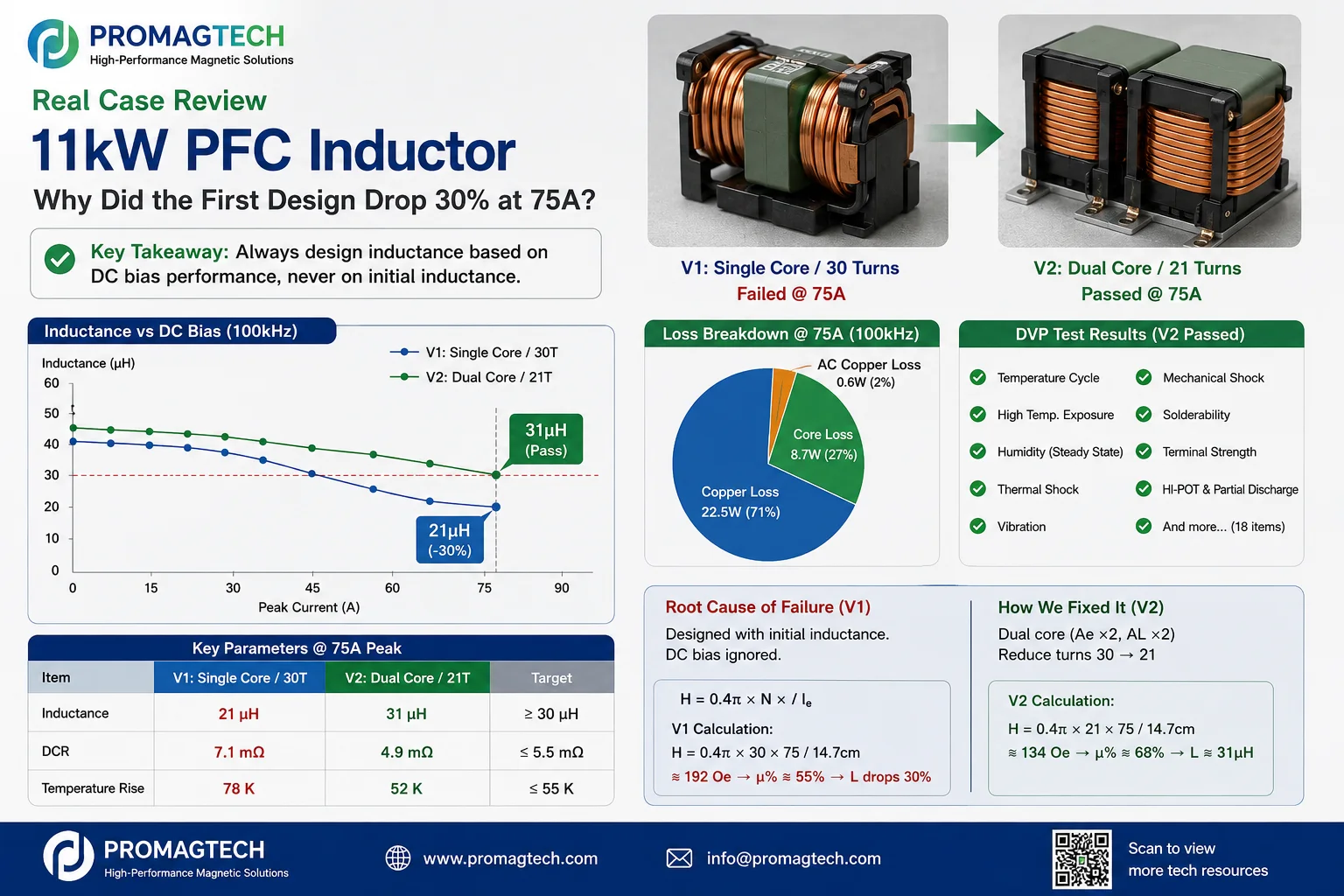
11 kW Totem-Pole PFC Boost Inductor for an 800 V OBC
Review a first-build DC-bias miss and a dual-core, lower-turn flat-wire revision using anonymized inductance, DCR and temperature-rise values.
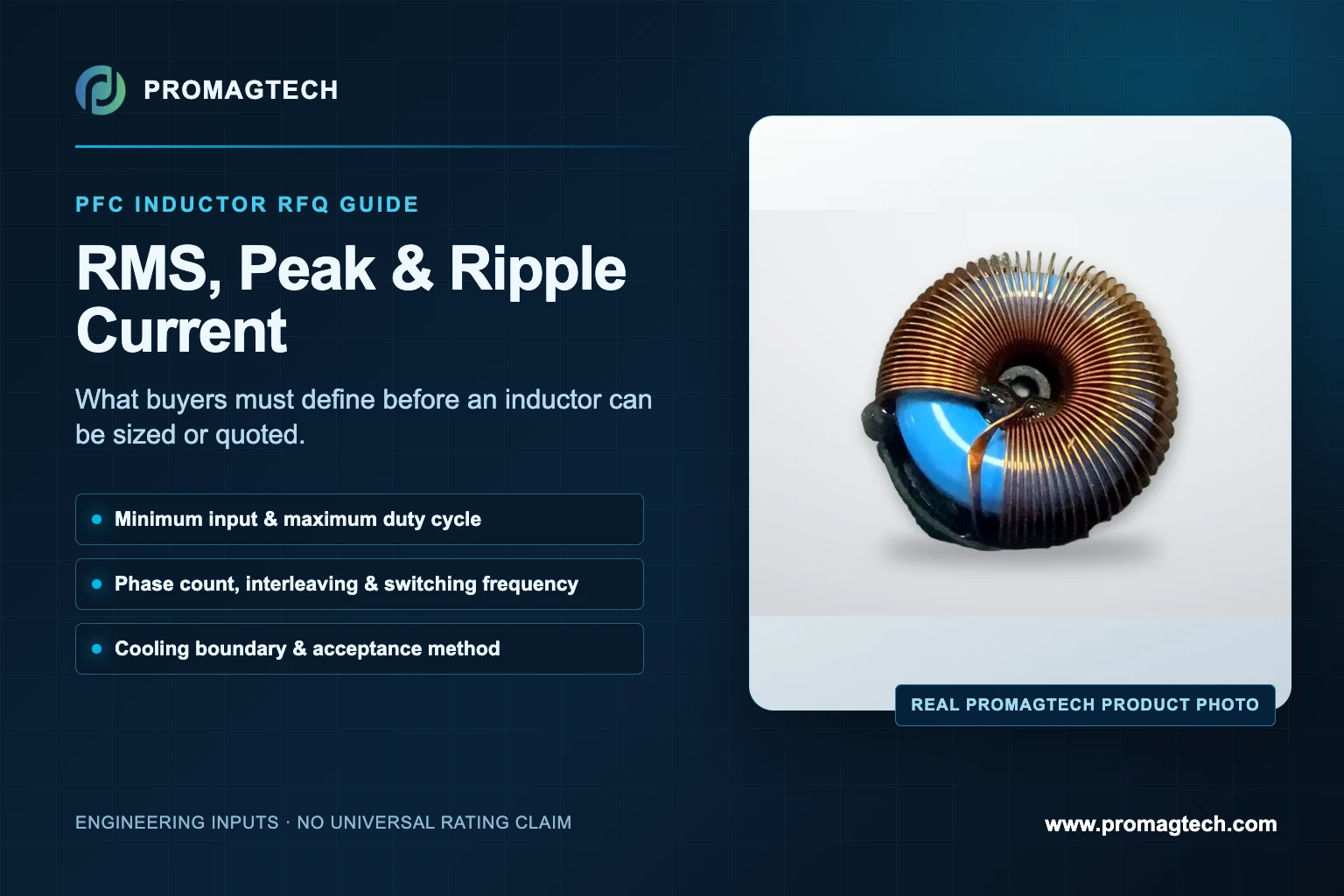
RMS, Peak & Ripple Current for 20–60 kW PFC
Define minimum input, topology, phases, interleaving, per-phase waveform, loaded inductance, cooling and acceptance before sizing or quoting.
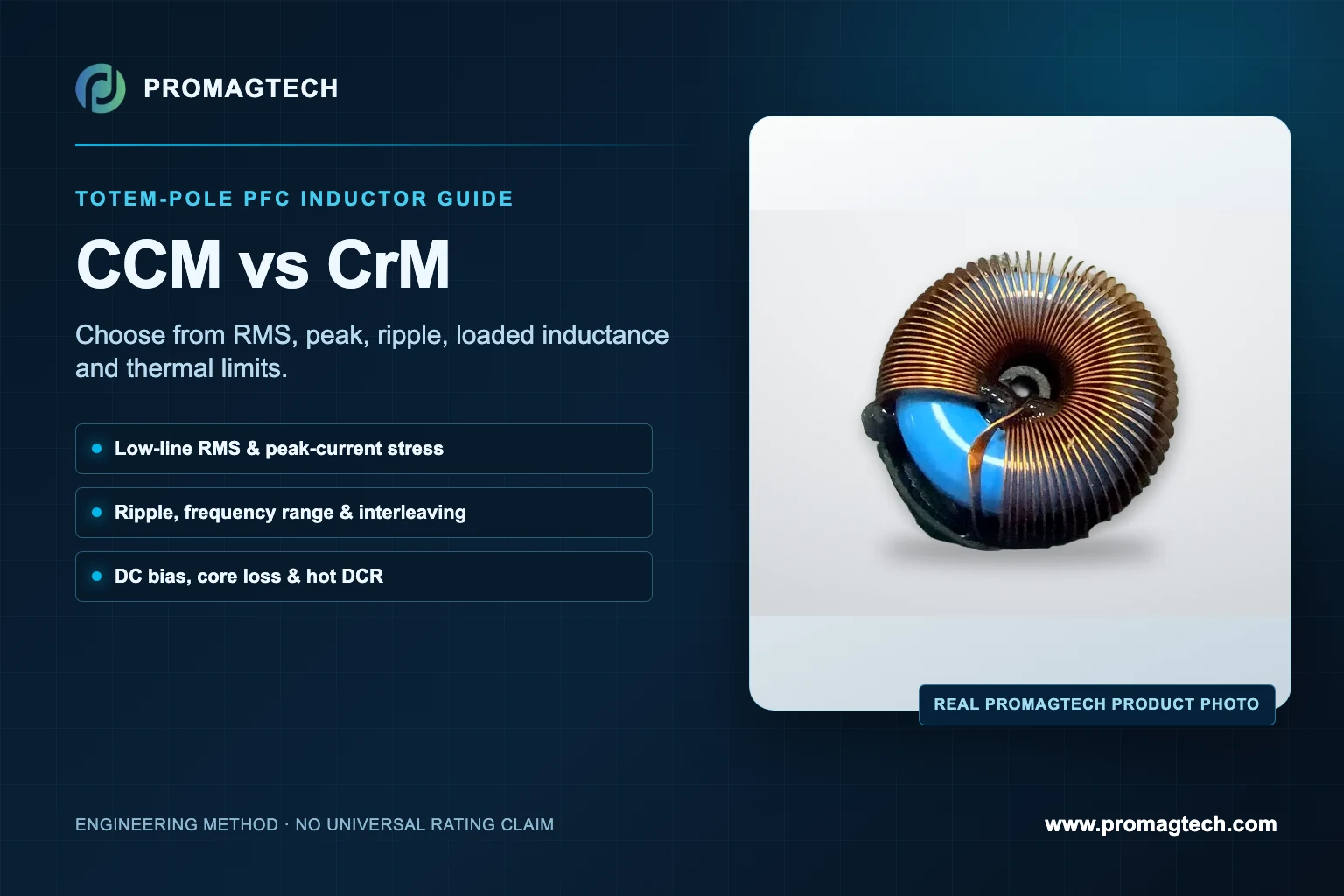
CCM vs CrM: Current Stress & Ripple
Choose from low-line RMS, peak, ripple, loaded inductance, frequency range, interleaving, DC bias, loss and cooling—not power alone.
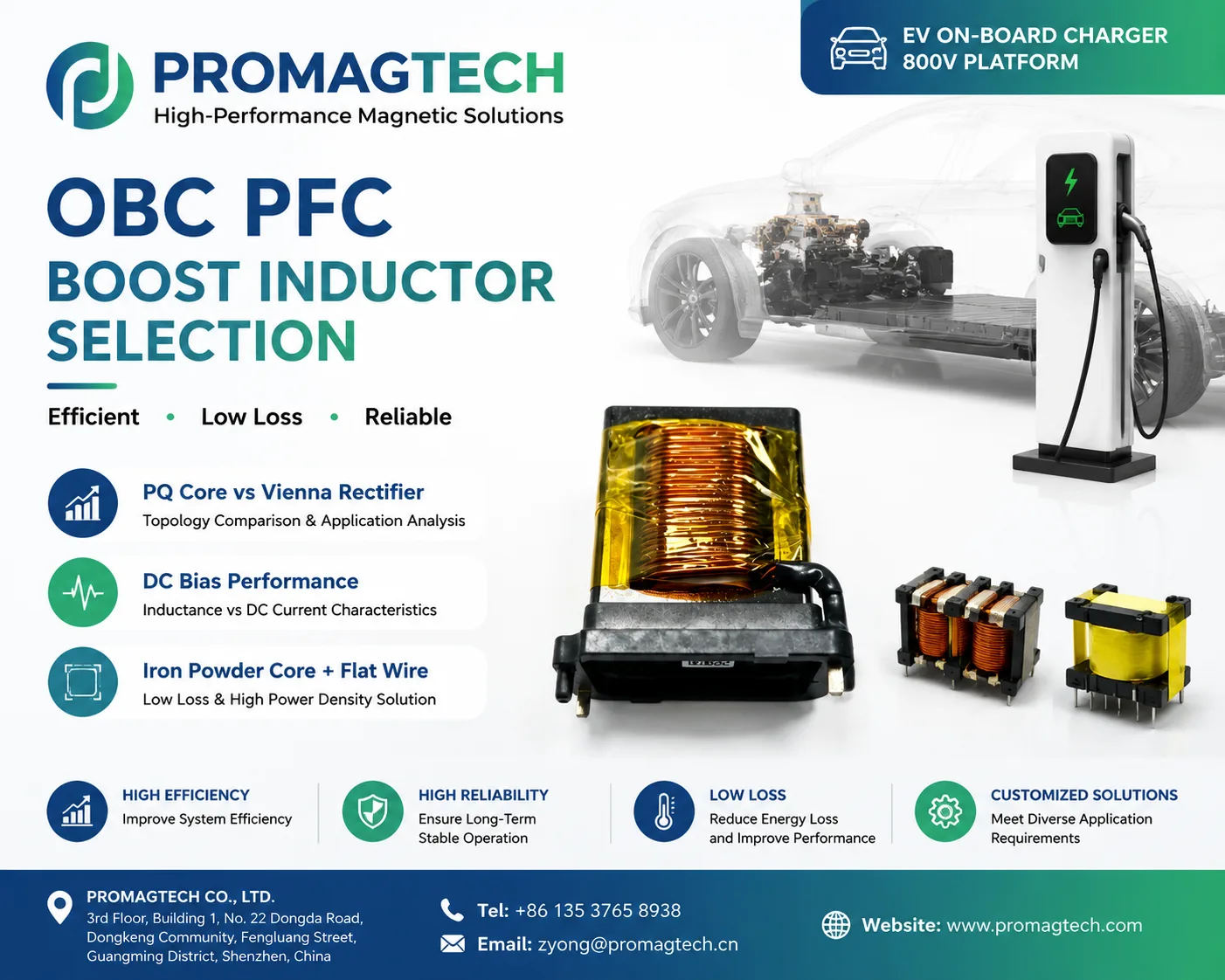
OBC PFC Boost Inductor Selection for 800 V EV On-Board Charger
Compare 11 kW totem-pole and 22 kW Vienna PFC boost inductor requirements, including inductance knee, DC bias, powder core behavior, flat wire winding and 800 V insulation boundaries.
Planar and High Frequency Transformers
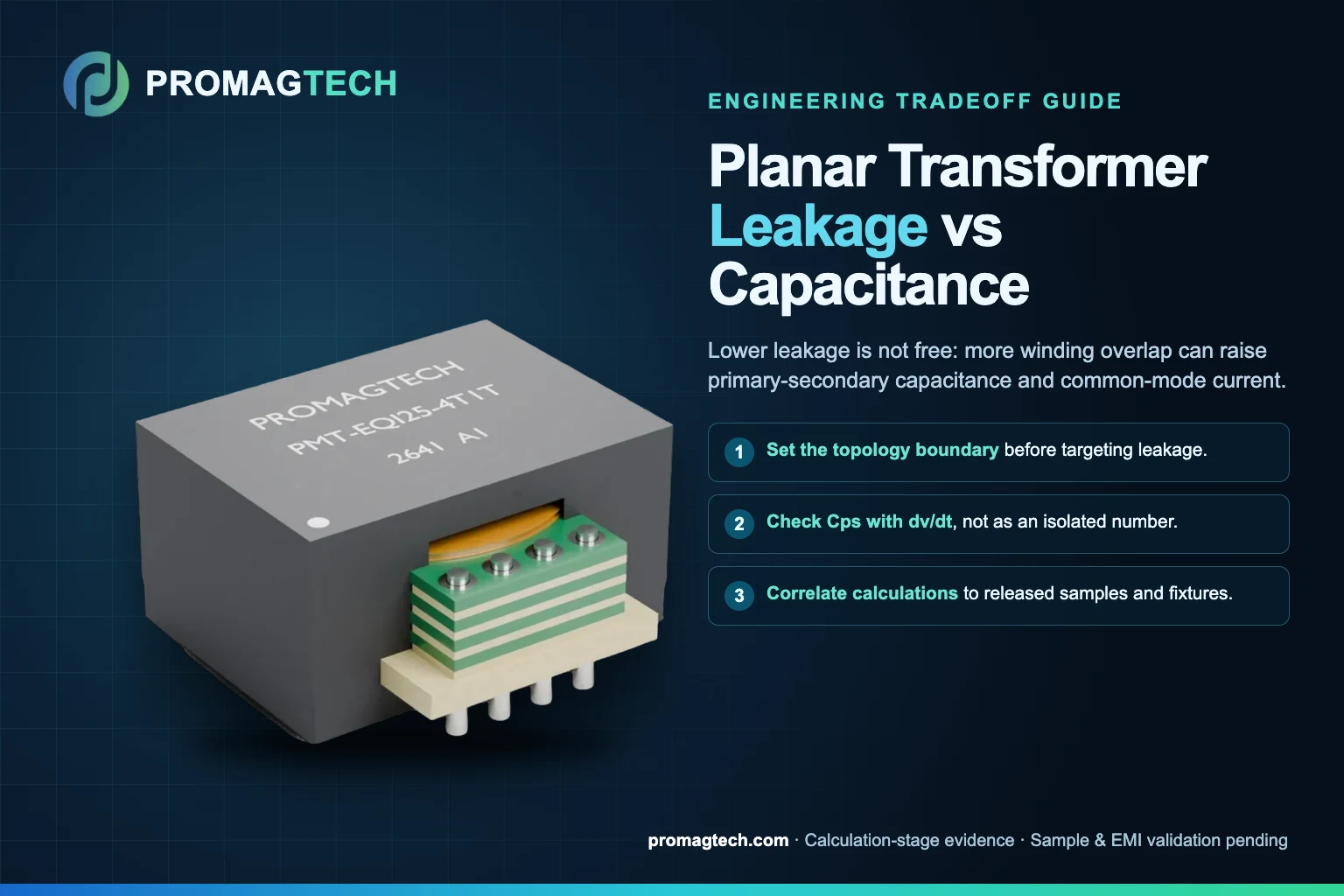
Planar Transformer Leakage vs Capacitance: How Do You Balance Them?
Use topology, winding overlap, dv/dt, common-mode current, insulation, terminals and sample correlation to set both parasitic limits.
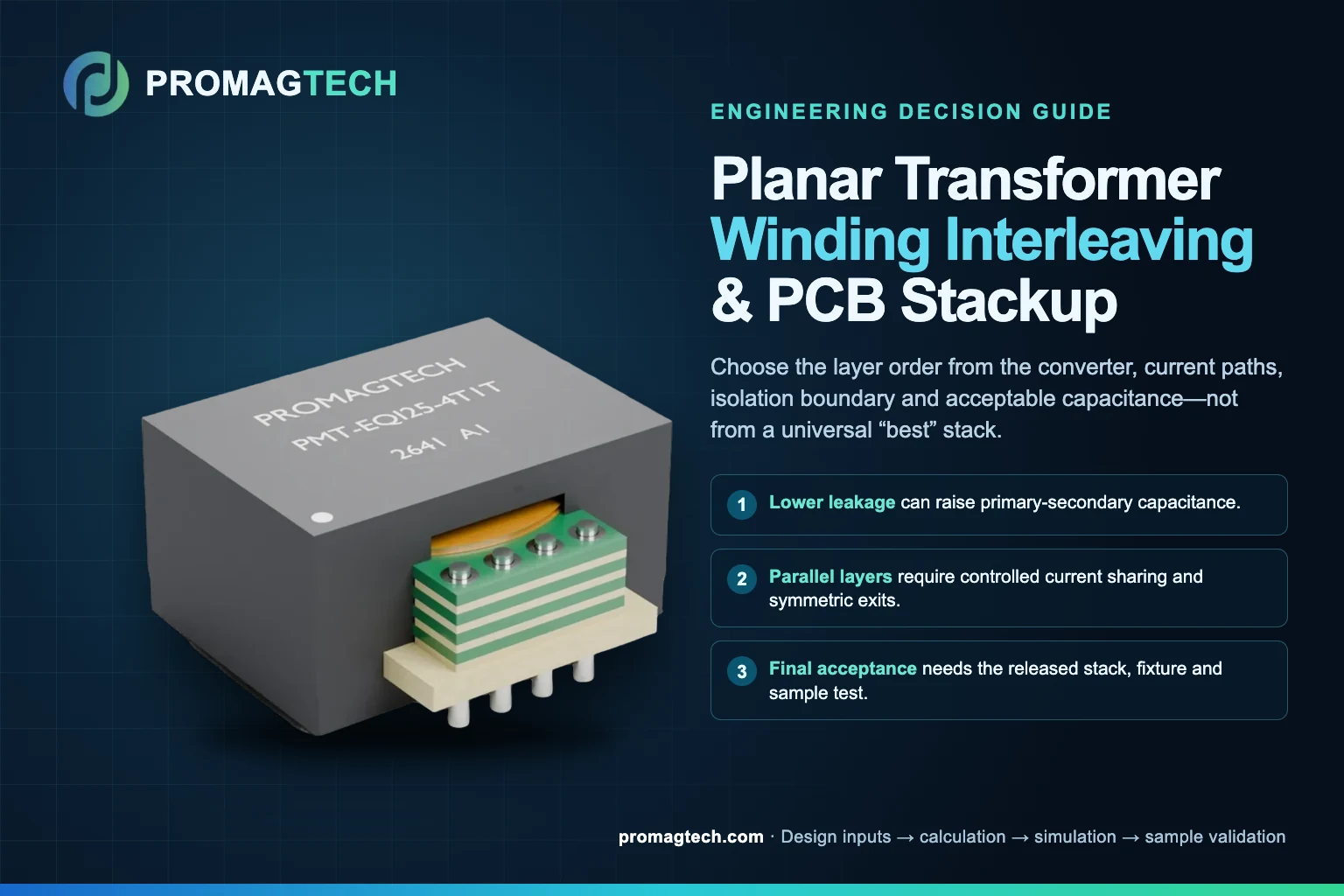
Winding Interleaving & PCB Stackup: How Do You Choose?
Balance leakage, capacitance, AC loss, current sharing, insulation, terminals and thermal limits before releasing the stack.
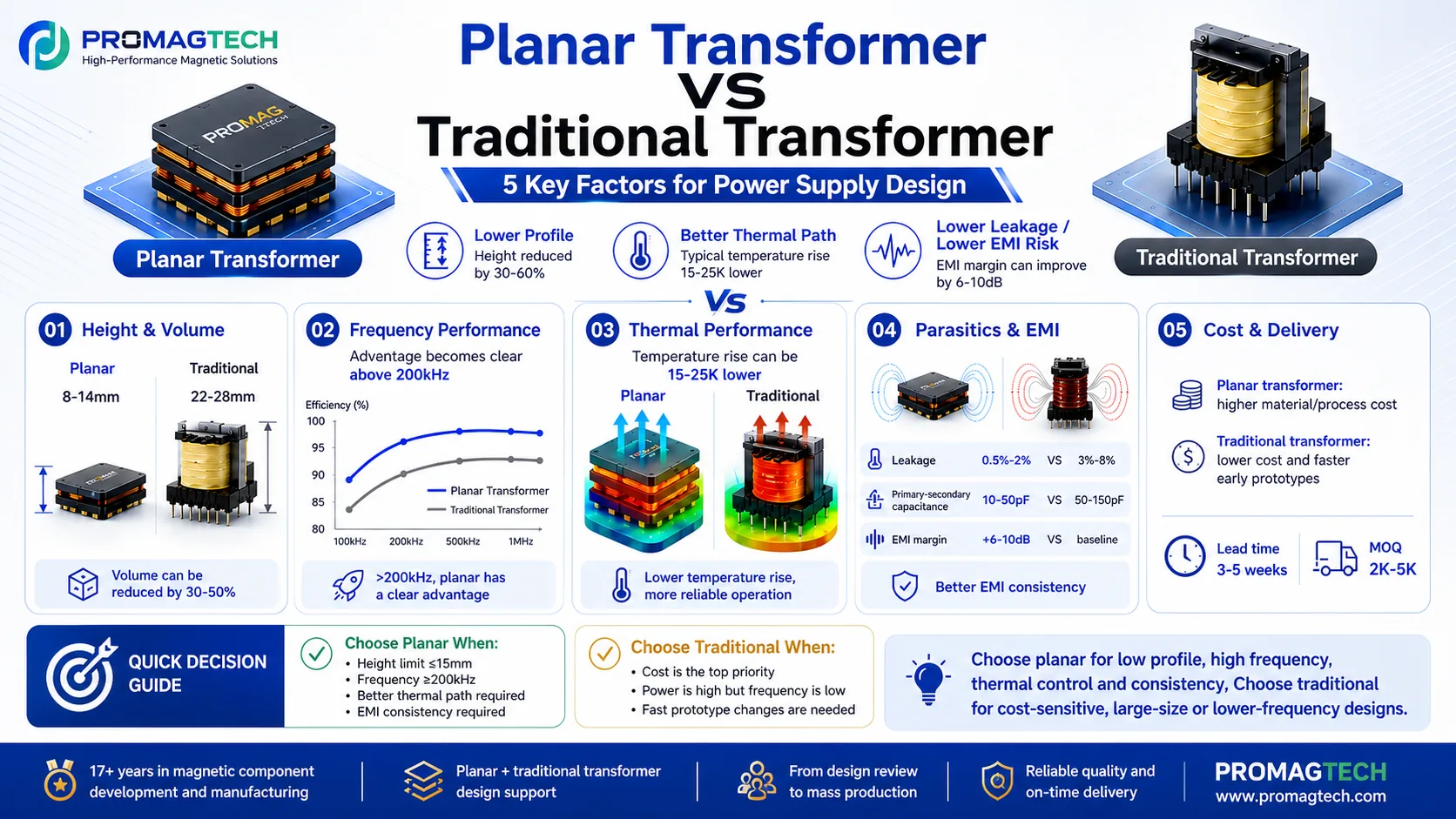
Planar Transformer vs Traditional Transformer: How to Choose
Compare planar and traditional transformers by height, frequency, thermal path, EMI, production consistency, cost, and delivery cycle for power electronics designs.
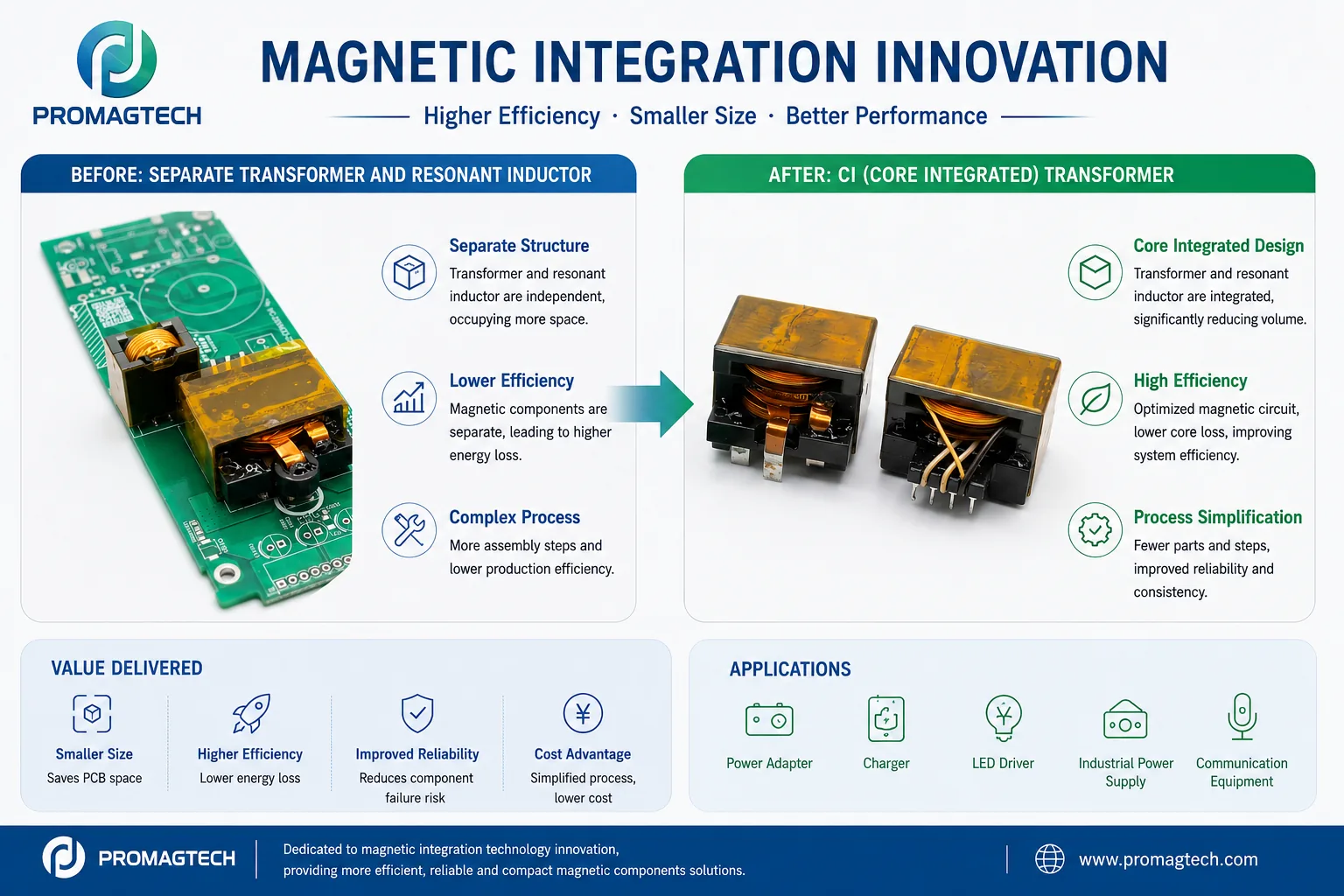
Magnetic Integration Technology: Core Integrated Transformer and Resonant Inductor
Review how transformer and resonant inductor functions can be combined into one core integrated magnetic component for compact LLC and DC-DC power conversion systems.
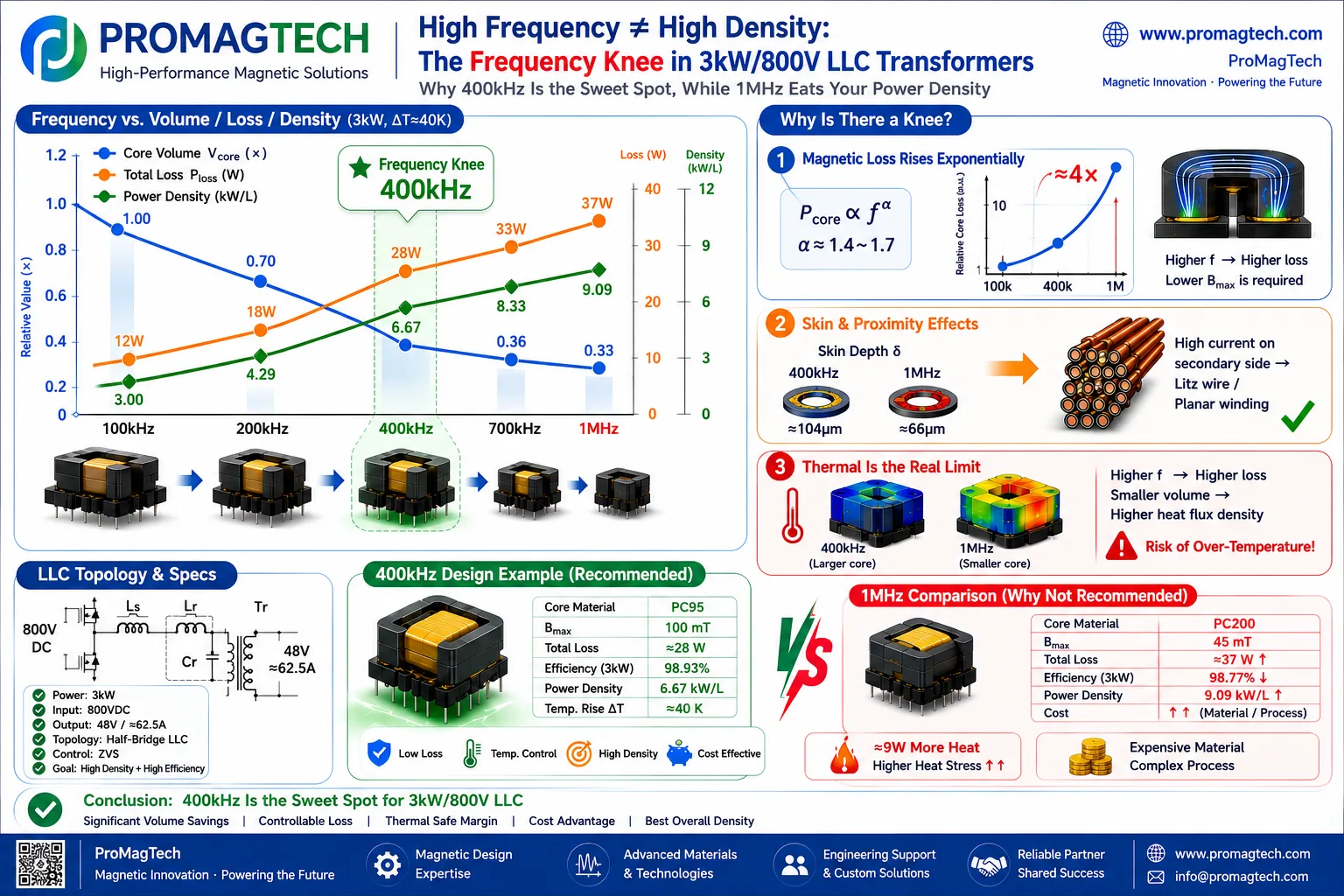
High Frequency vs High Density: 400 kHz LLC Transformer Frequency Knee
Review why a 3 kW / 800 V LLC transformer example treats 400 kHz as a practical frequency knee, while 1 MHz can raise loss, heat density and process cost.
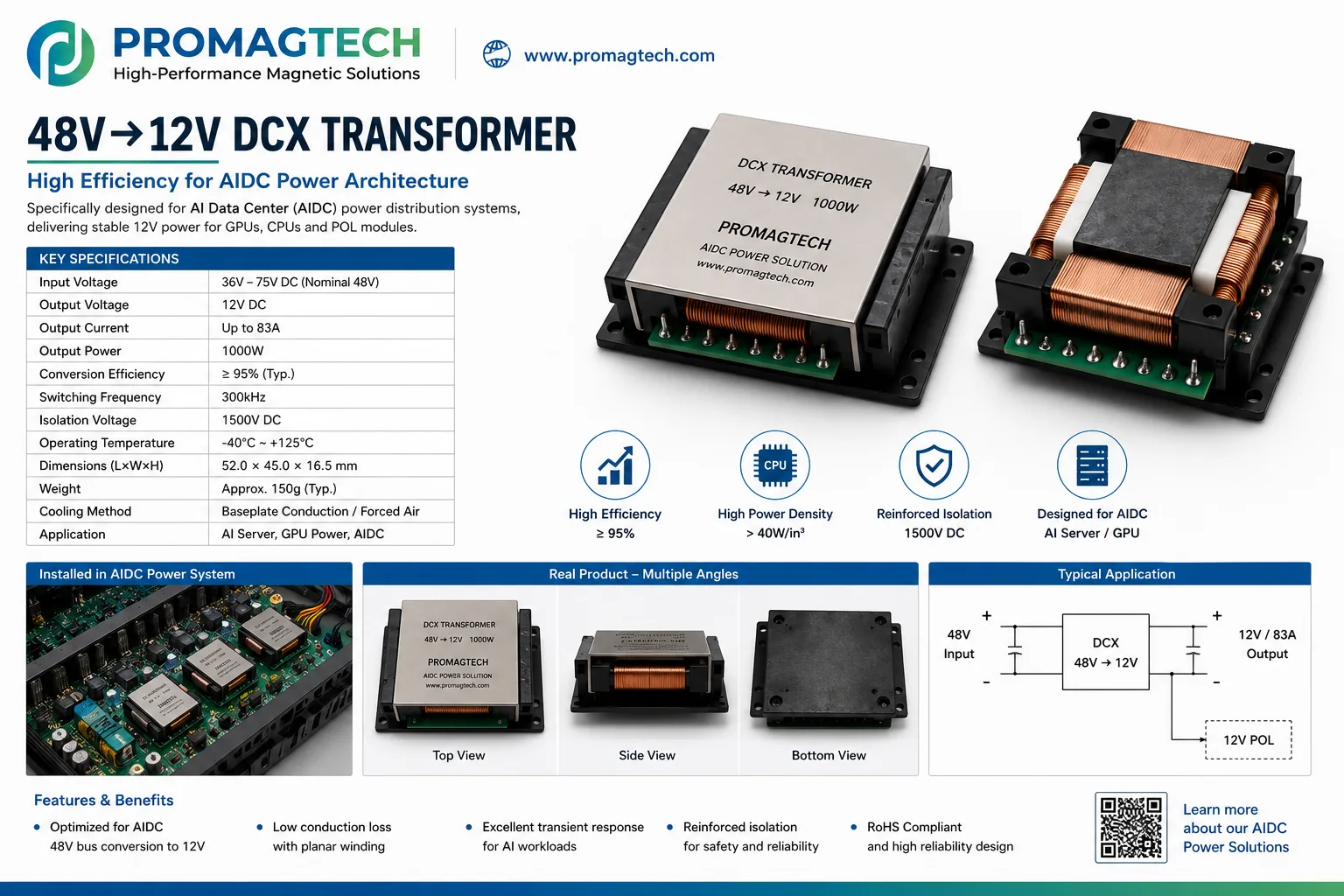
IBC DCX Transformer Loss Analysis for AI Server Power
Review why magnetic loss can dominate the 48 V to 12 V intermediate-bus DCX transformer stage, and why waveform-aware core-loss estimation matters.
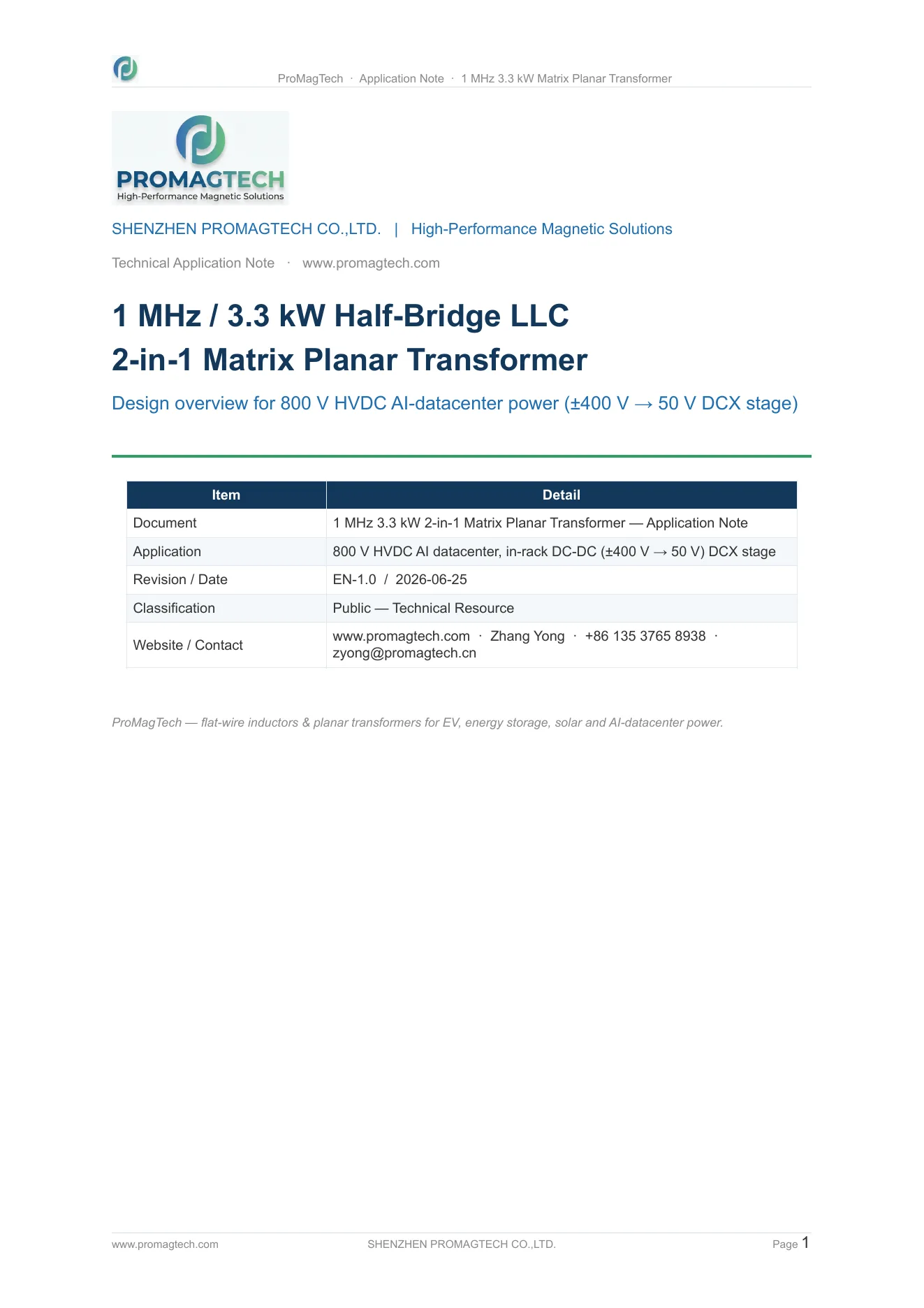
1 MHz / 3.3 kW Matrix Planar Transformer Application Note
Review a 1 MHz, 3.3 kW half-bridge LLC 2-in-1 matrix planar transformer for 800 V HVDC AI datacenter power, including compact structure, electrical specification and thermal path.

How to Design a 3.2 V / 240 A Planar Transformer for LLC-DCX
Review a 3.2 V / 240 A LLC-DCX planar transformer design: ISOP turns ratio, interleaved foil/PCB stack-up, loss budget and sample validation.
Common Mode Chokes and EMI
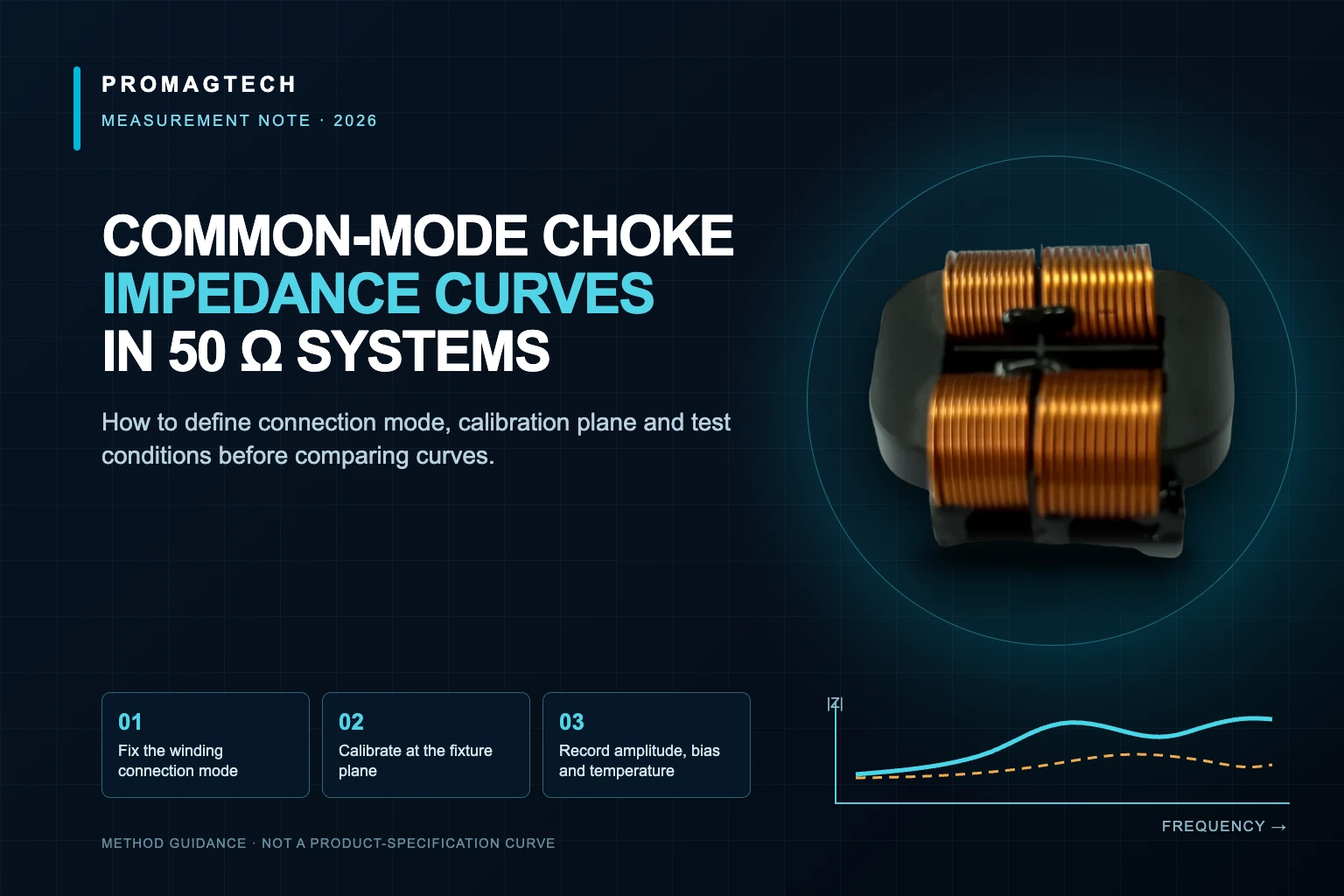
Common-Mode Choke Impedance Curves in 50 Ω Systems
Lock connection mode, calibration plane, fixture, amplitude, bias and temperature before comparing curves.
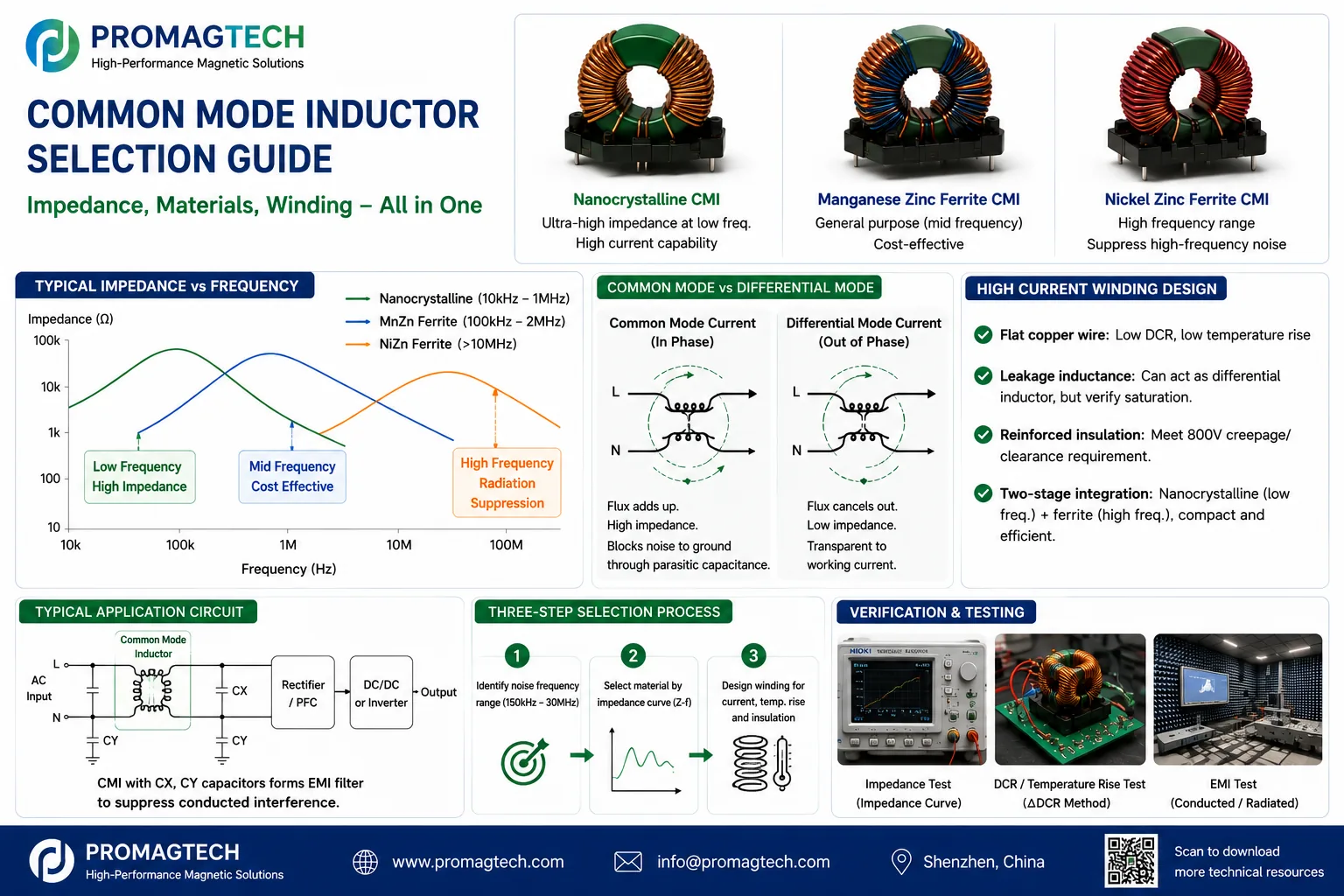
EMI & Common-Mode Magnetics — Selection Reference
Select common-mode chokes from noise path, Z-f curves, core materials, high-current windings, leakage and project-specific EMI validation.
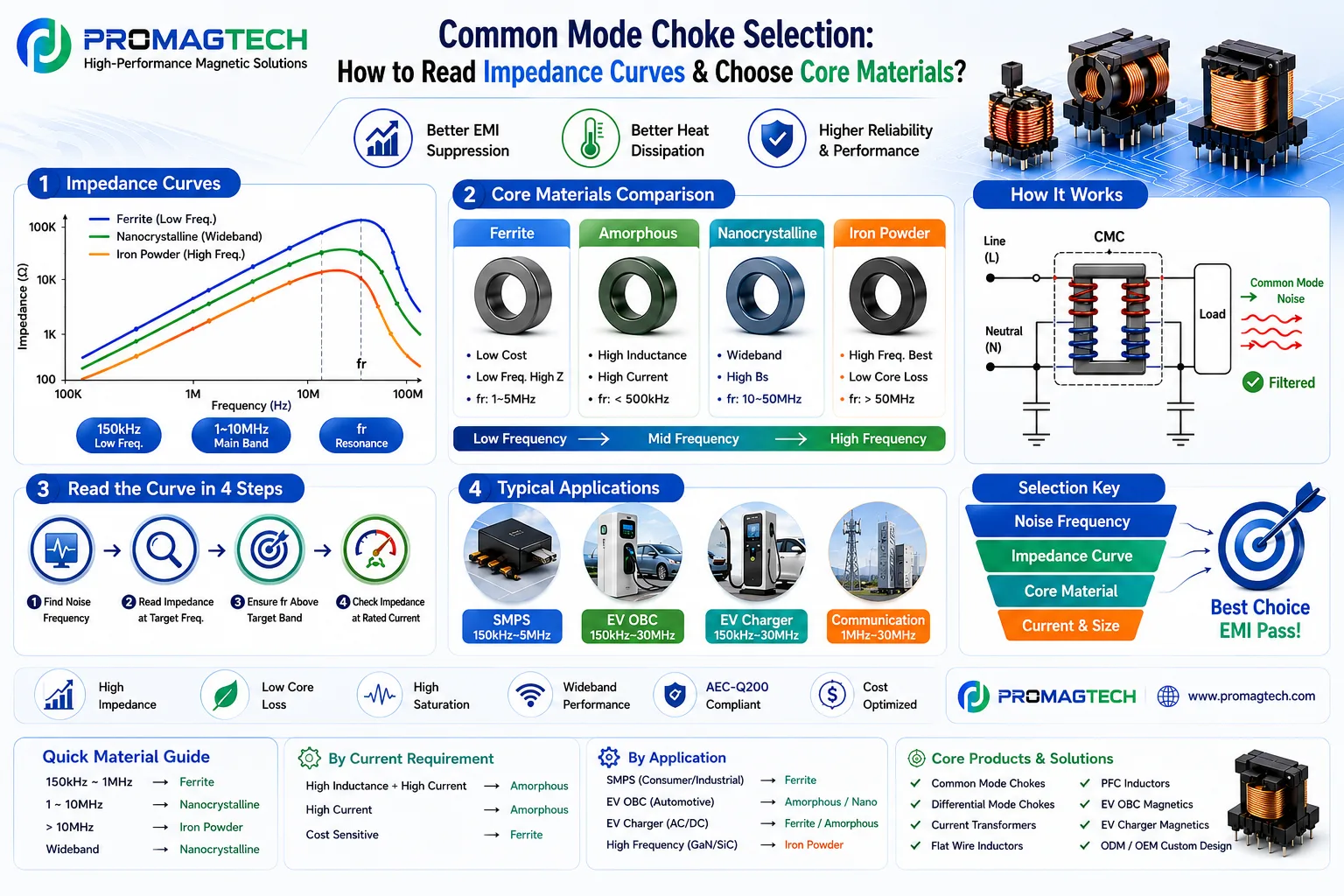
Common Mode Choke Selection: Impedance Curves and Core Materials
Learn how to read impedance curves, compare ferrite, amorphous, nanocrystalline and iron powder cores, and choose common mode chokes for SMPS, EV OBC, EV charger and communication power systems.
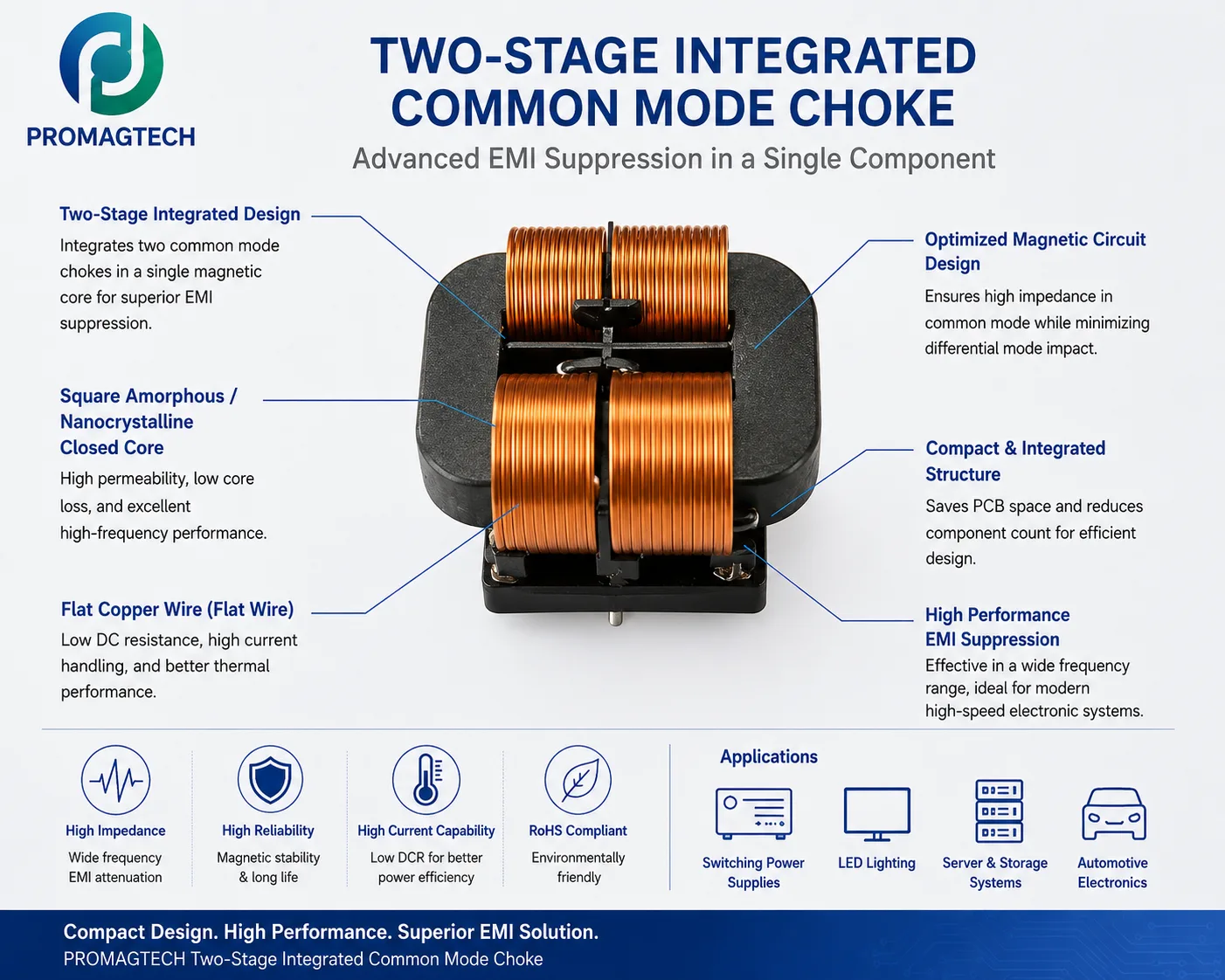
Two-Stage Integrated Common Mode Choke for EV, AI Server and Inverter EMI
Learn how asymmetric winding gauges, flat copper wire, and amorphous or nanocrystalline closed cores support compact two-stage EMI suppression.
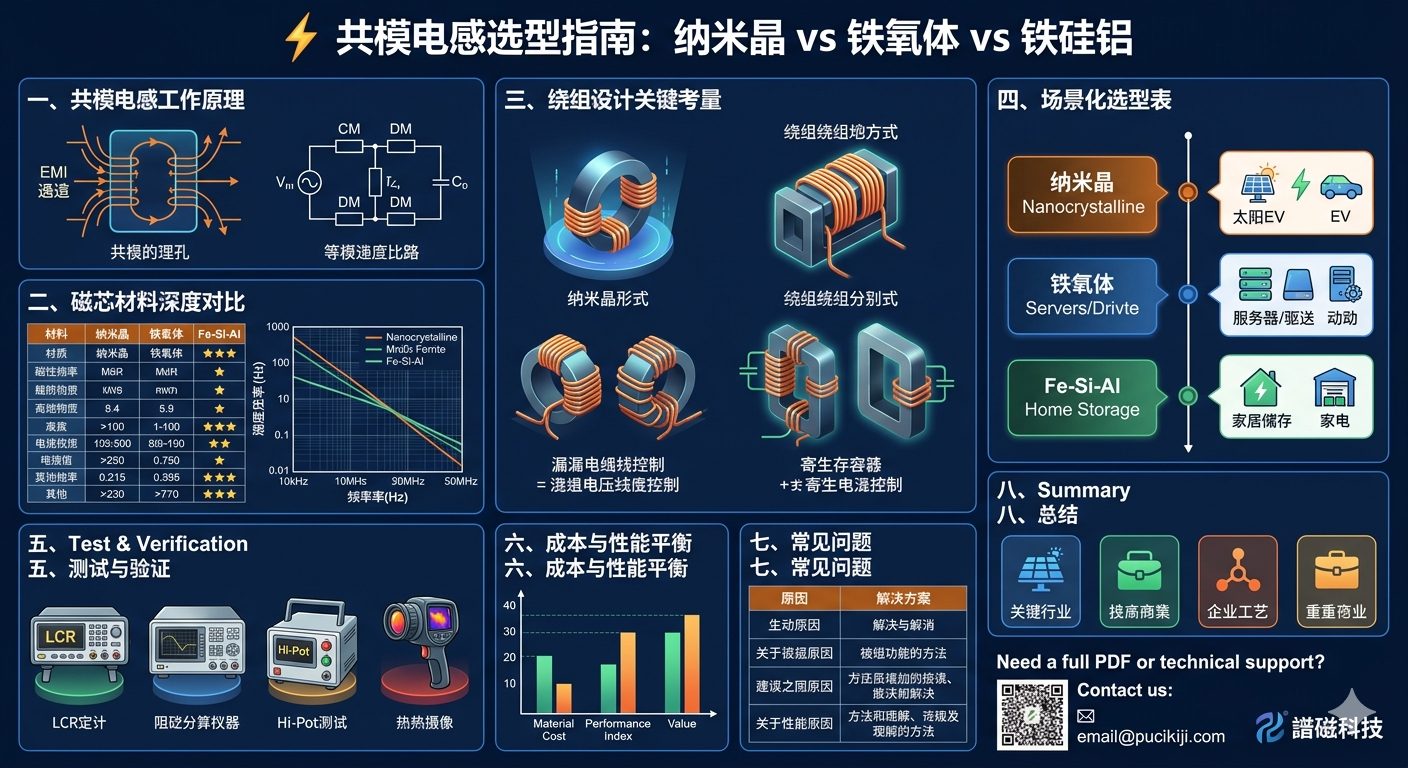
Common Mode Inductor Design Guide: Improving EMI Performance
Select common mode chokes from measured noise frequency, impedance curves, core material, winding capacitance and final-system EMC verification.
SiC/GaN dv/dt and Magnetics EMI Co-Design
Review switching-edge slew rate, parasitic capacitance, insulation stress and project-specific magnetics EMI validation.
EV Charging and OBC
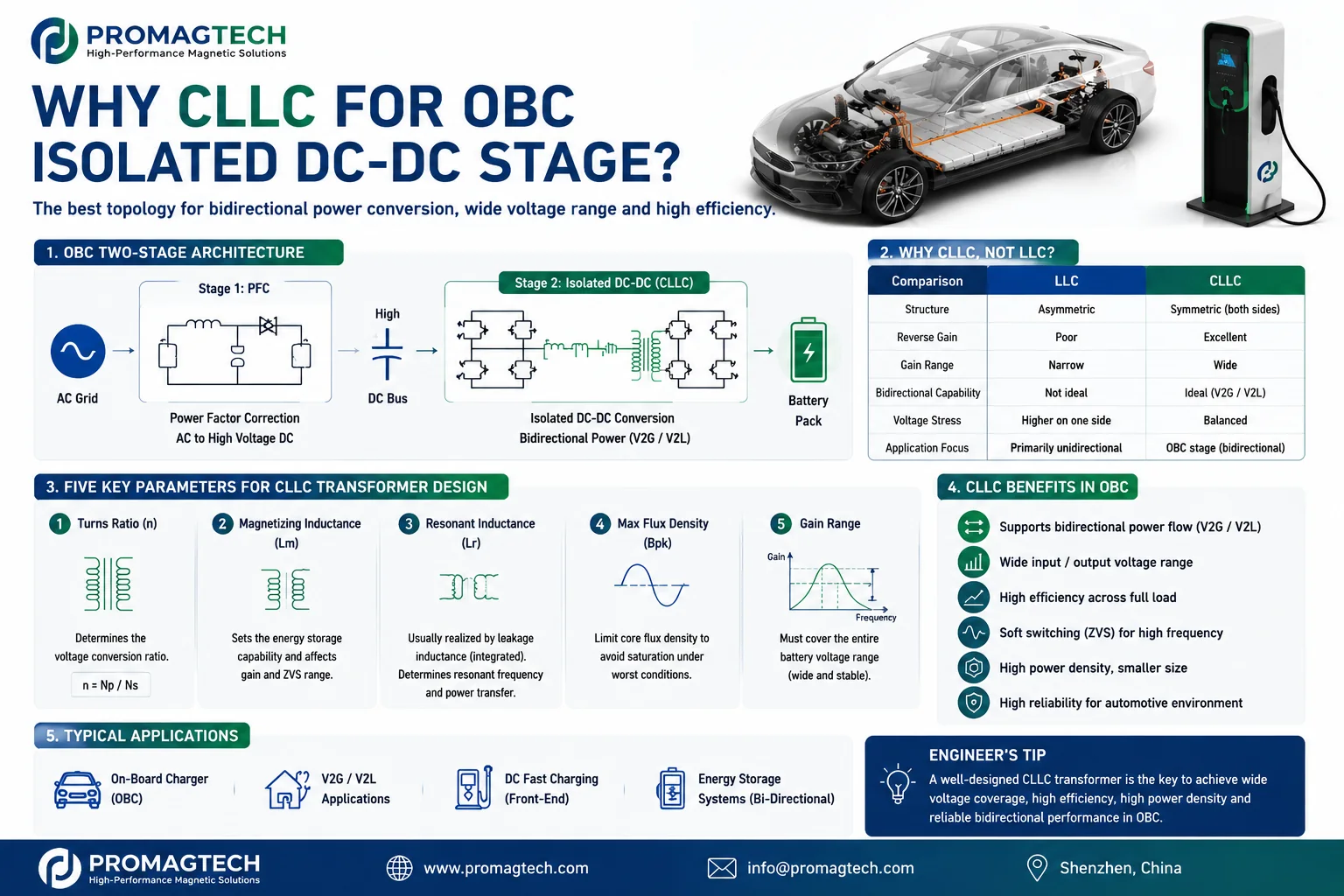
800 V OBC CLLC Bidirectional Transformer Selection
Review turns ratio, Lm, controlled leakage Lr, flux density, insulation, partial discharge and DVP checkpoints for the isolated bidirectional DC-DC rear stage.
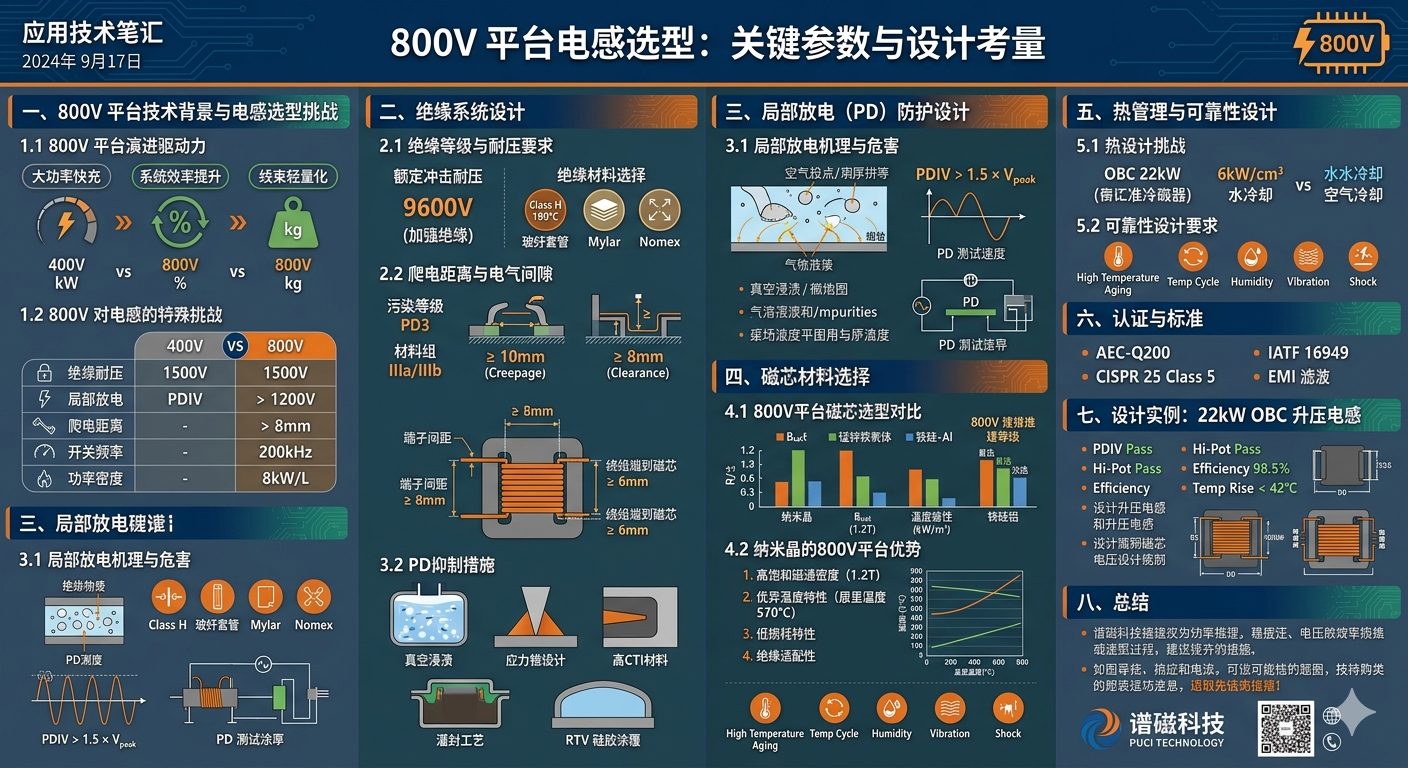
800 V Platform Inductor Selection: EV High Voltage Solutions
Review current waveform, DC bias, insulation coordination, partial-discharge criteria, thermal path and project validation for 800 V EV power platforms.
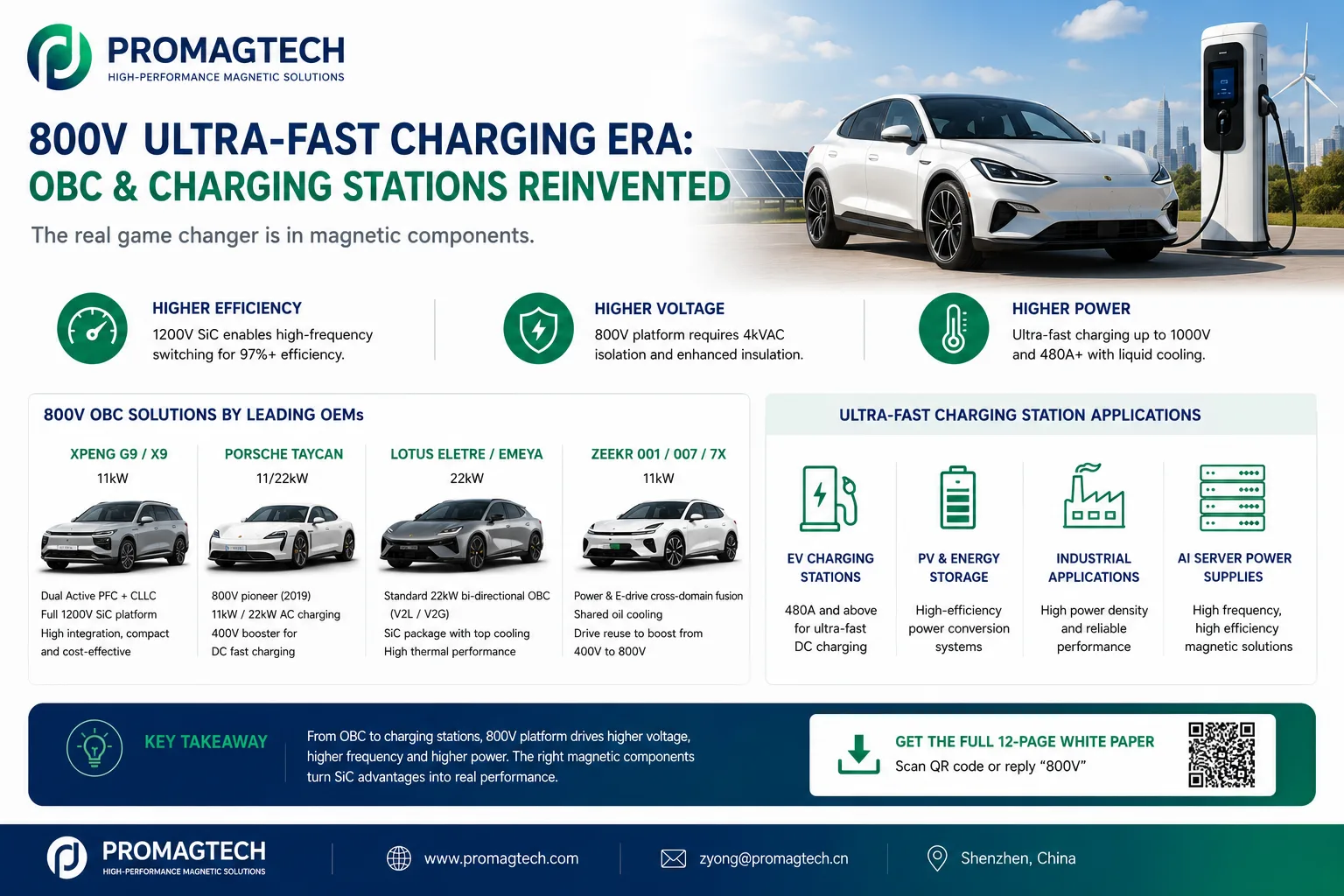
800 V EV Charging Systems White Paper
Review OBC, DC fast-charging infrastructure, 1200 V SiC, 4 kV-class insulation, 480–600 A liquid-cooled charging and power magnetics requirements for 800 V-class EV platforms.
Energy Storage PCS and Solar
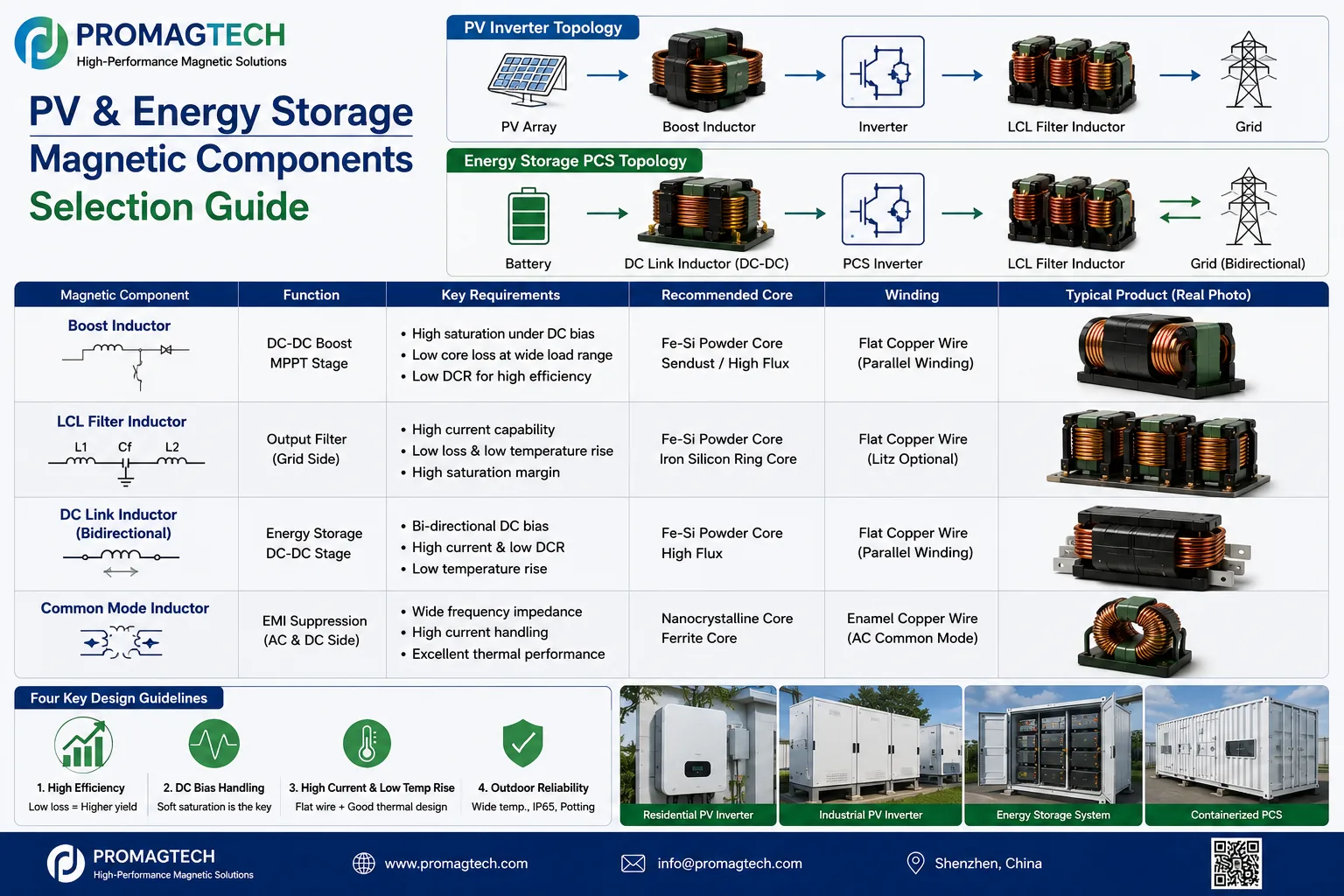
Solar & Energy-Storage Magnetics - Selection Reference
Map boost, LCL, bidirectional DC and common-mode magnetics across PV and ESS chains, with outdoor and DVP boundaries.
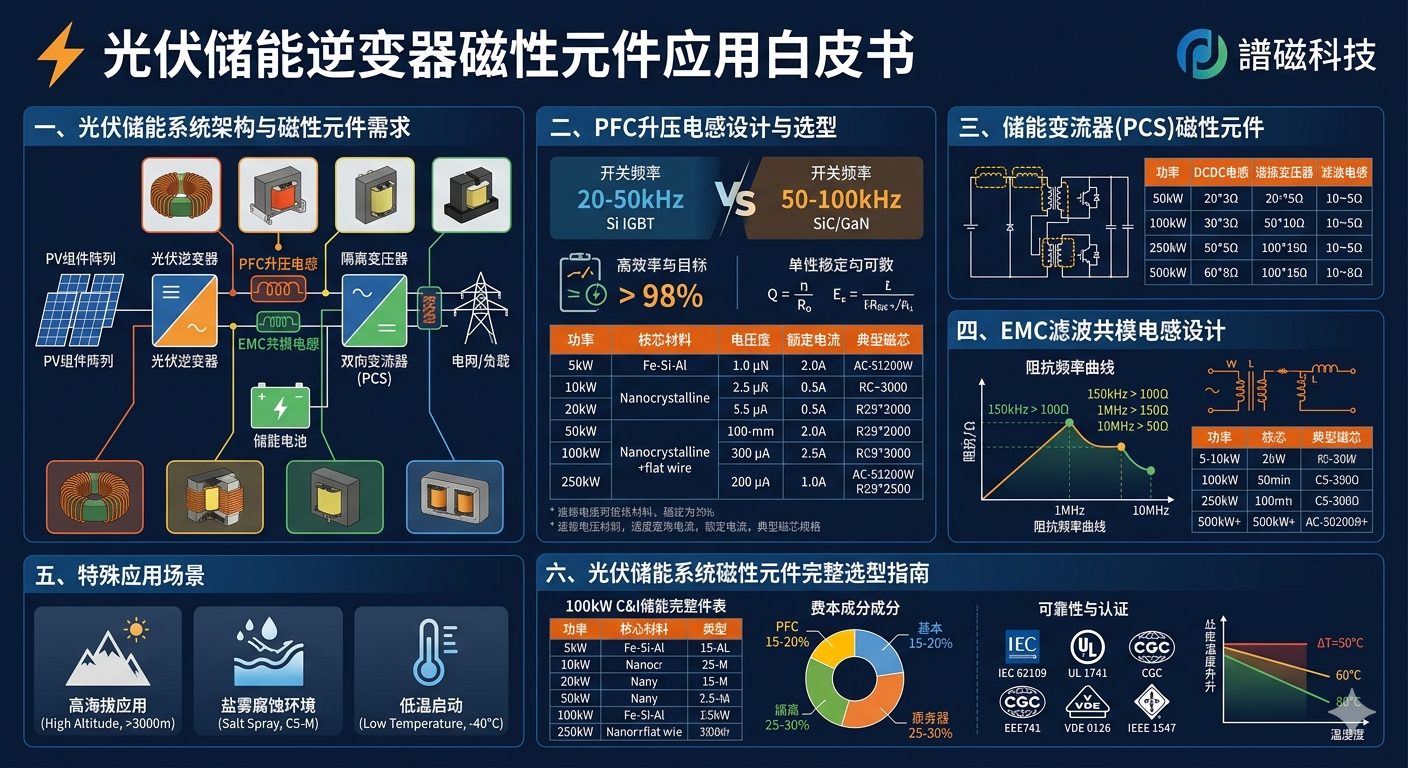
Solar Energy Storage Magnetic Components Whitepaper
Review solar-inverter and energy-storage PCS magnetics by topology, current waveform, loss, insulation, cooling and sample validation.
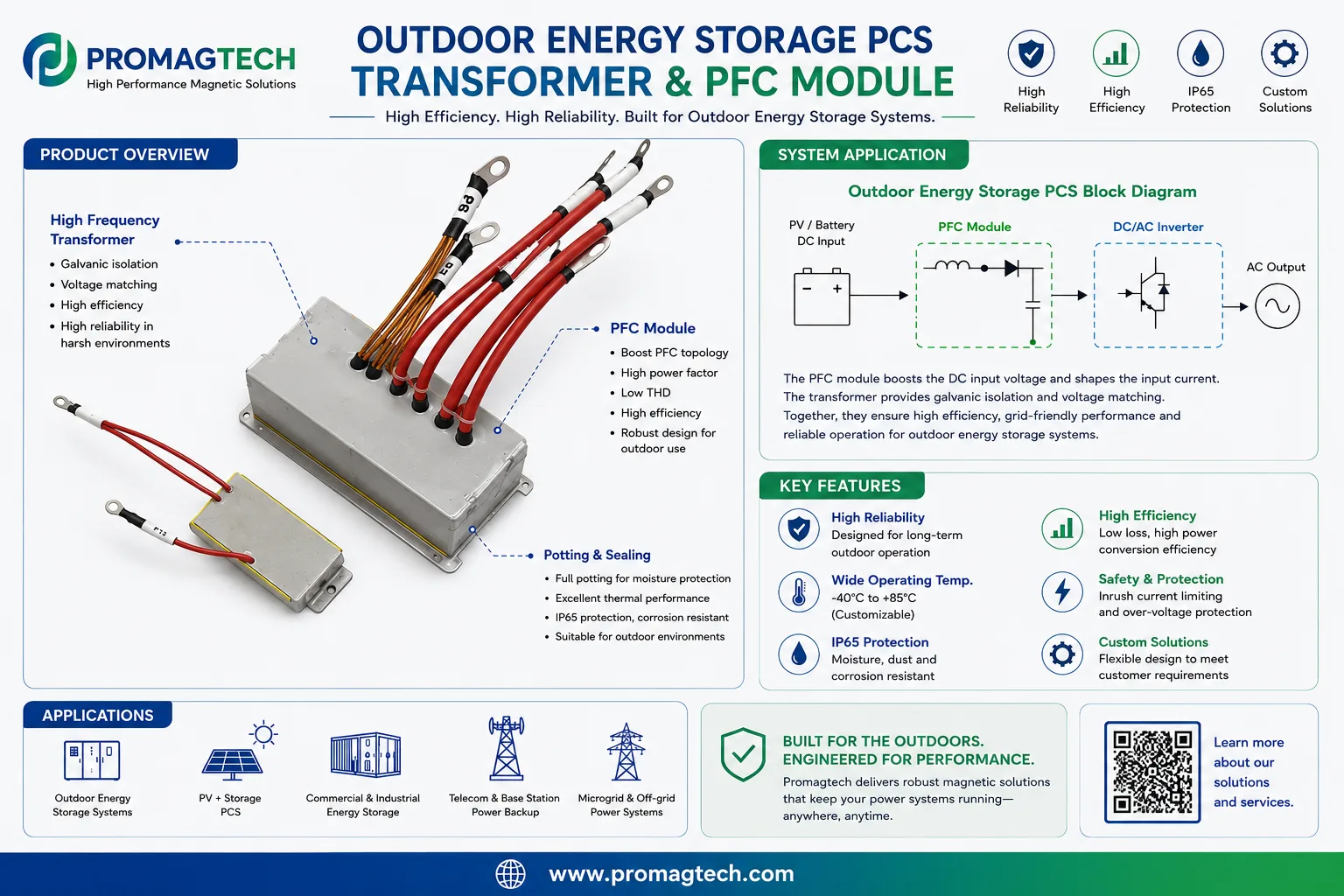
Outdoor Energy Storage PCS Magnetics Design Guide
Review outdoor PCS transformer and PFC module design points including sealing, IP65 protection, thermal path, insulation and validation scope.
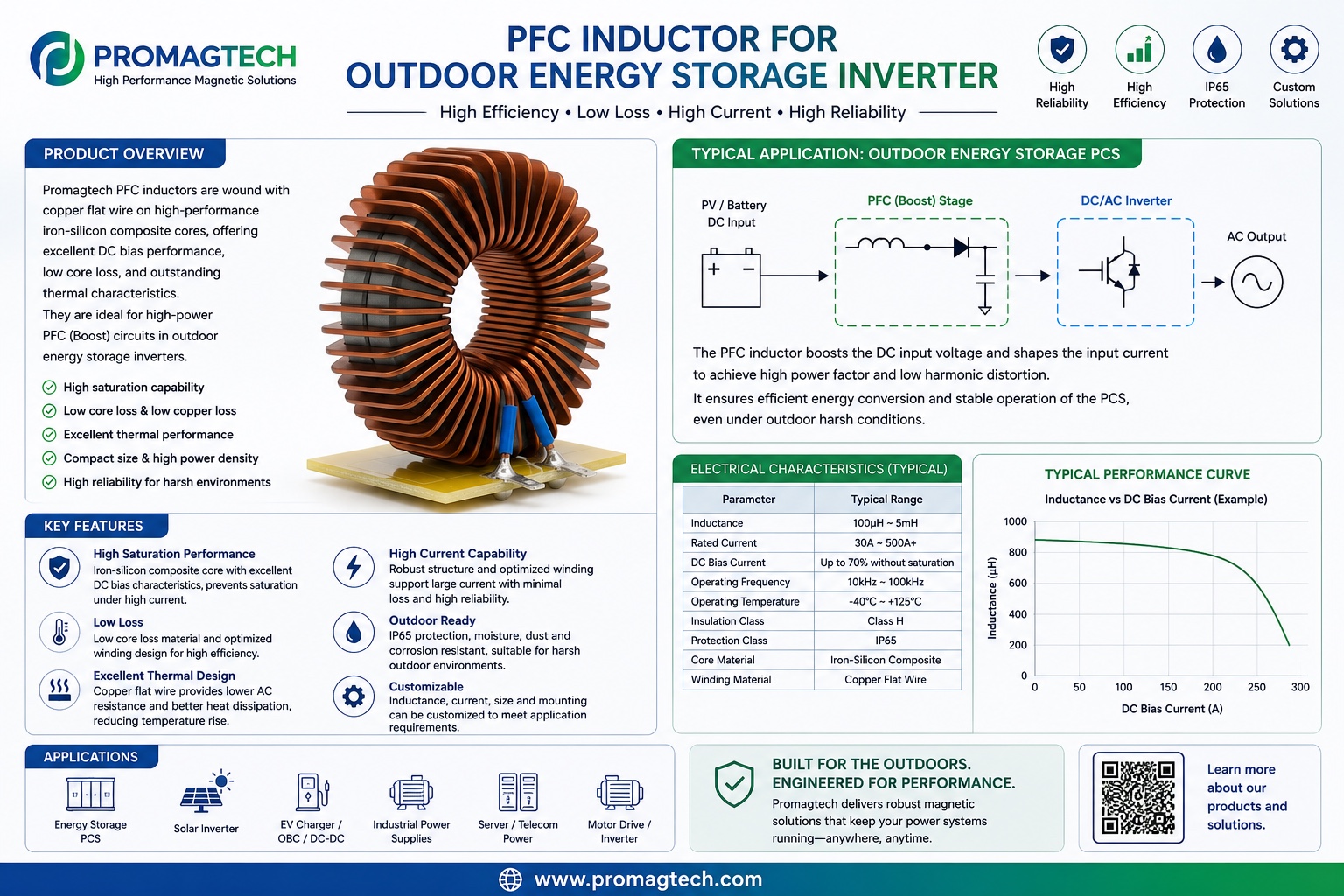
Toroidal Power Inductor for PV and Outdoor Energy Storage Inverter
Review high-current toroidal flat wire PFC inductor design points for PV inverters, outdoor energy storage PCS, EV chargers and industrial power systems. English PDF download is included.
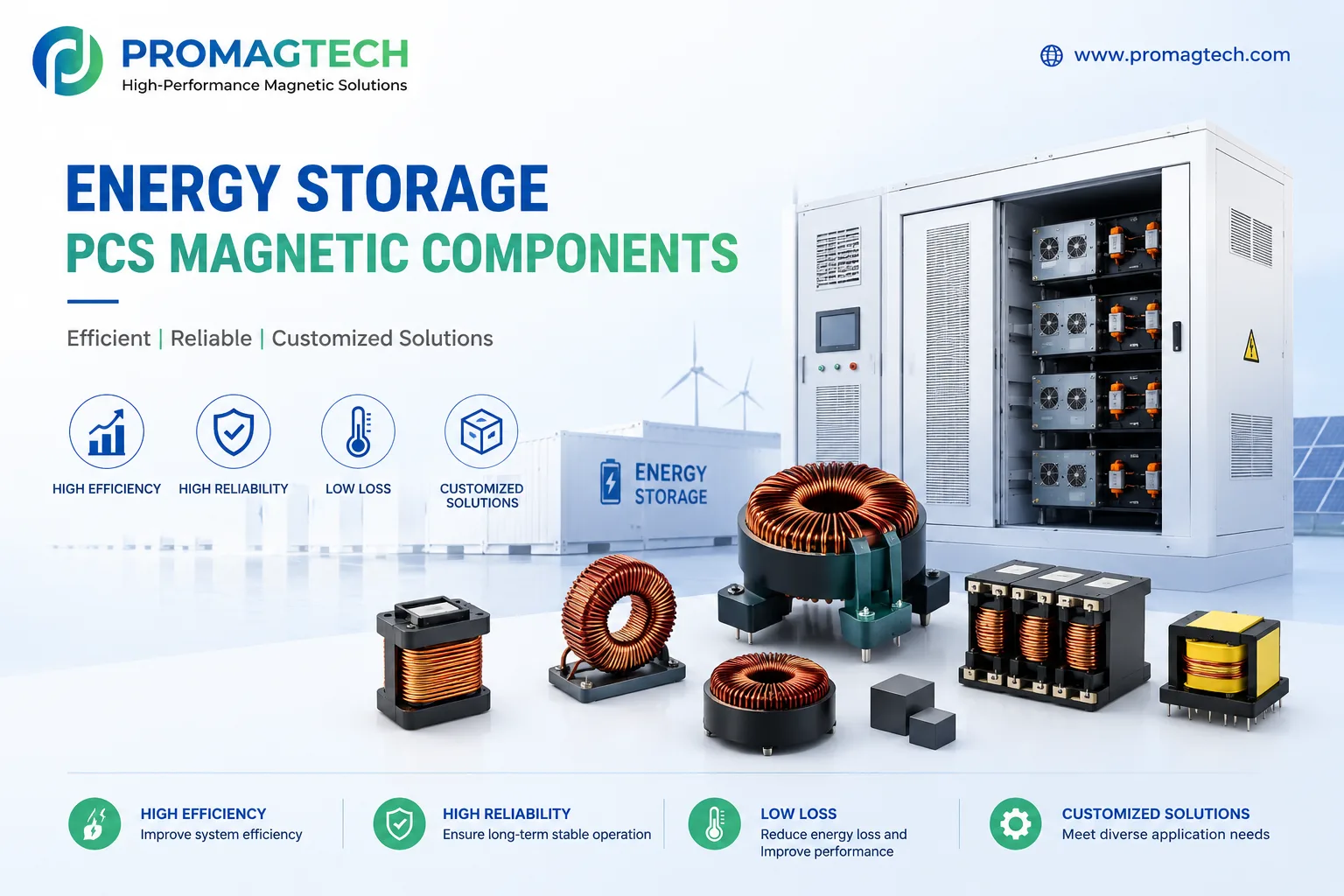
Energy Storage PCS Magnetic Components White Paper
Review high-efficiency, high-reliability, low-loss and customized magnetic component design points for energy storage PCS systems.

How to Design a Four-in-One Boost Inductor for a 250 kW PV MPPT
Review loaded inductance at 100 A, 64 kHz interleaved ripple, copper and core losses, and thermal paths at 60 °C for a four-in-one PV MPPT boost inductor.
AI Data Center Power
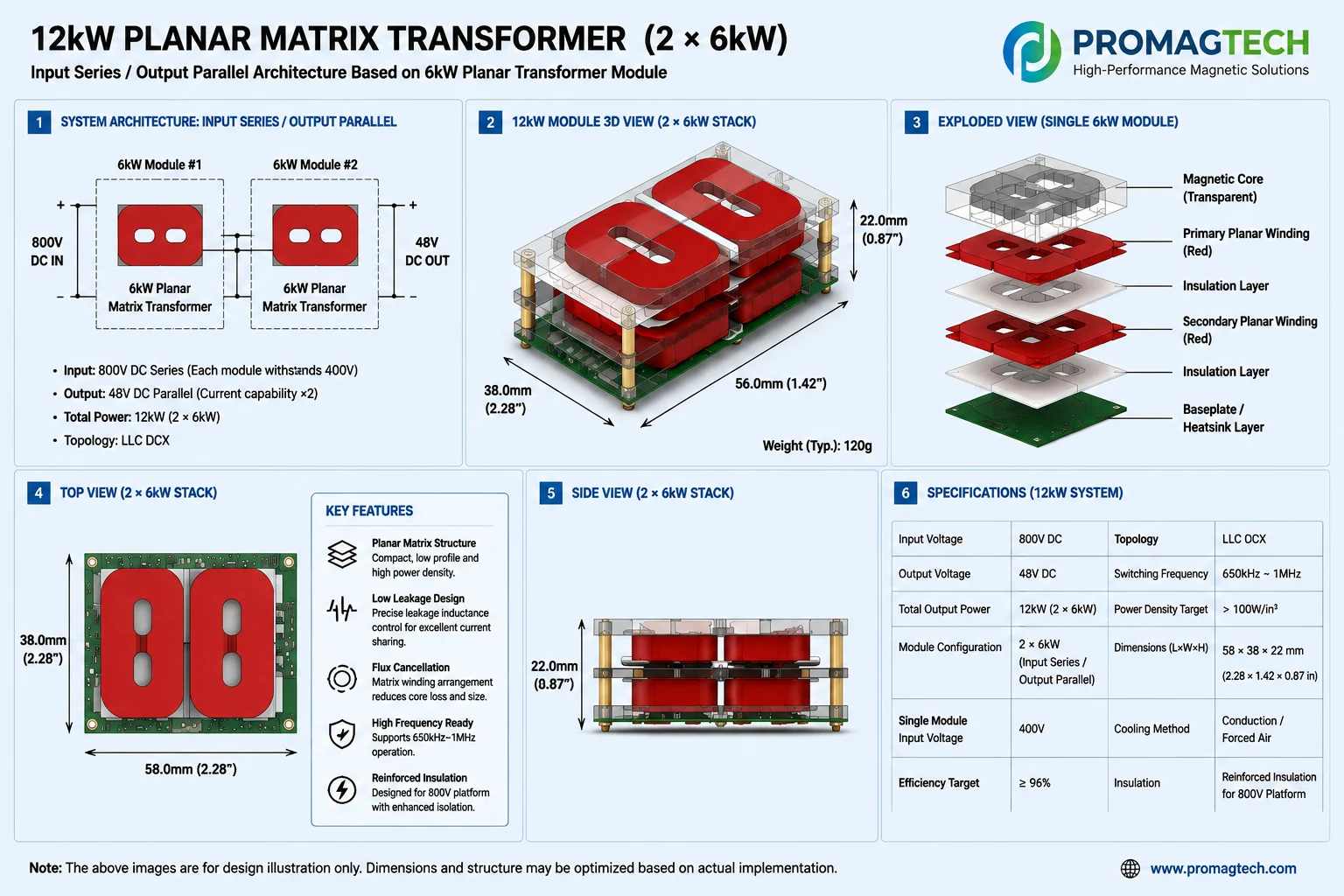
Renesas 800 V Power Architecture: Magnetics Teardown
Decode the 16:1 LLC DCX, planar matrix transformer, leakage matching, equal-airgap control and Vienna boost magnetics from a supplier-engineering perspective.
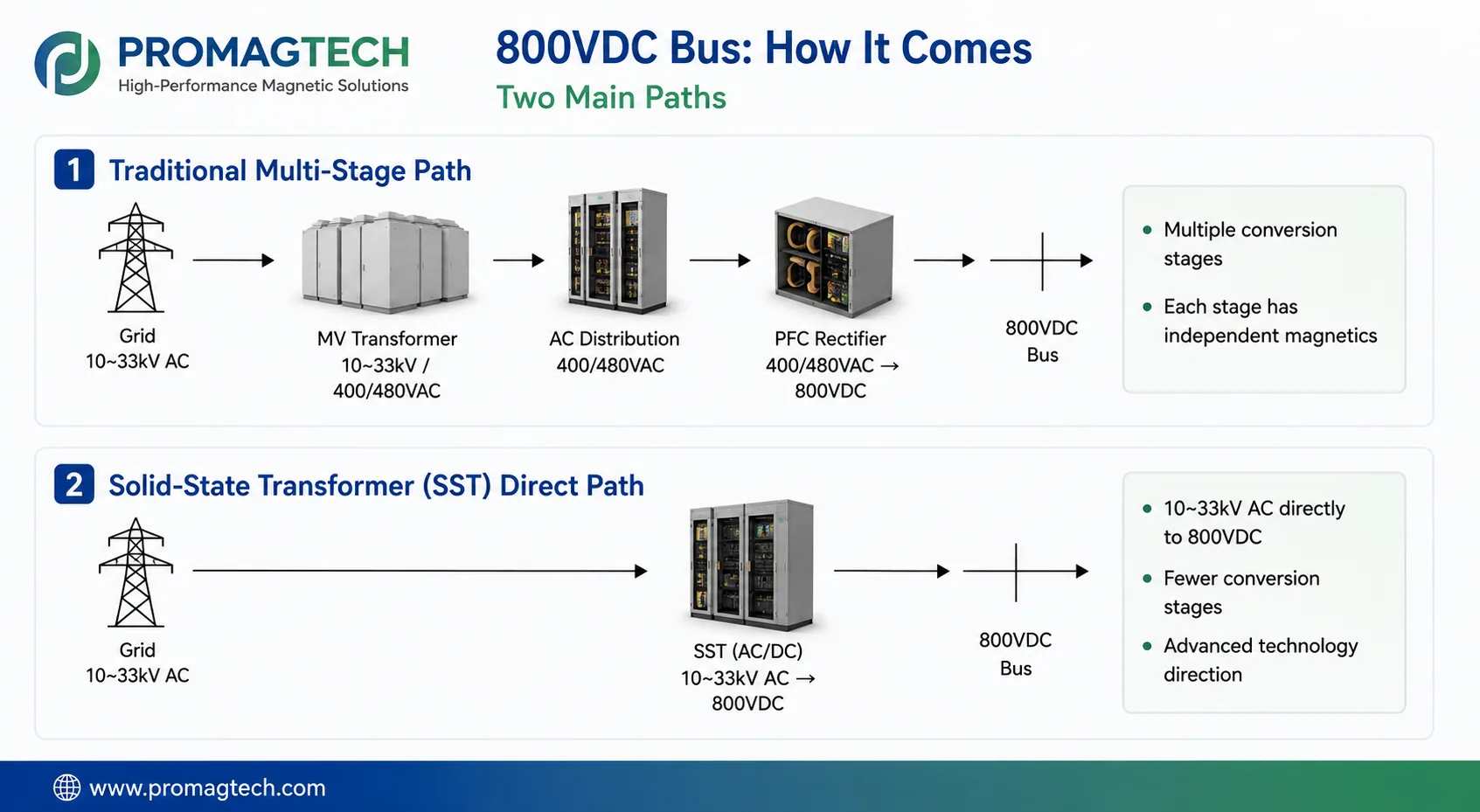
800 VDC Bus to 48 V: Magnetics Division of Labor in the AIDC Power Architecture
Separate bus sourcing, isolated step-down, matrix paralleling, PFC and common-mode roles for AIDC systems that use a 48 V intermediate bus.
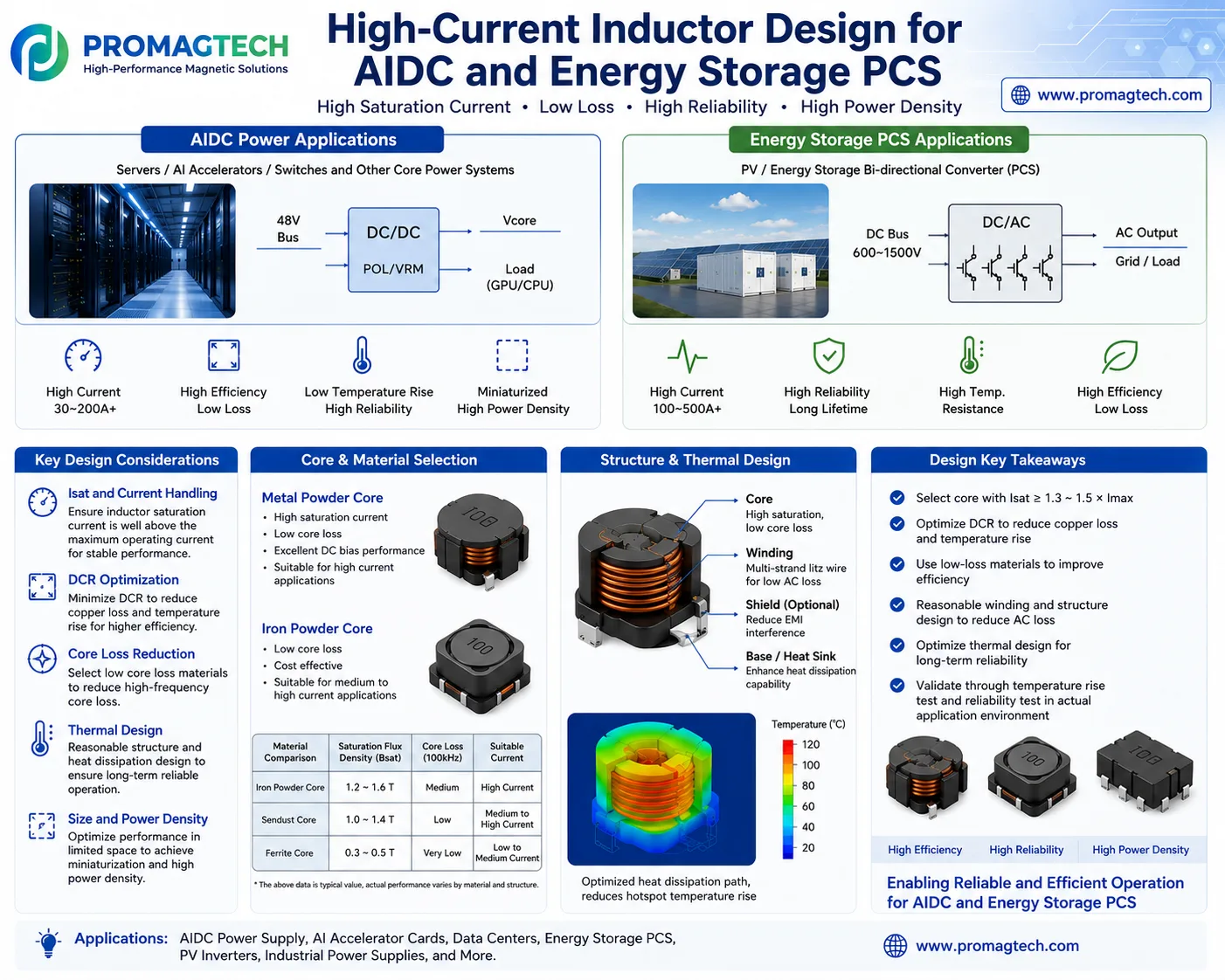
High-Current Inductor Design for AIDC and Energy Storage PCS
Review saturation current margin, DCR optimization, core loss, metal powder core selection, thermal structure and validation checkpoints for AIDC power and energy storage PCS inductors.
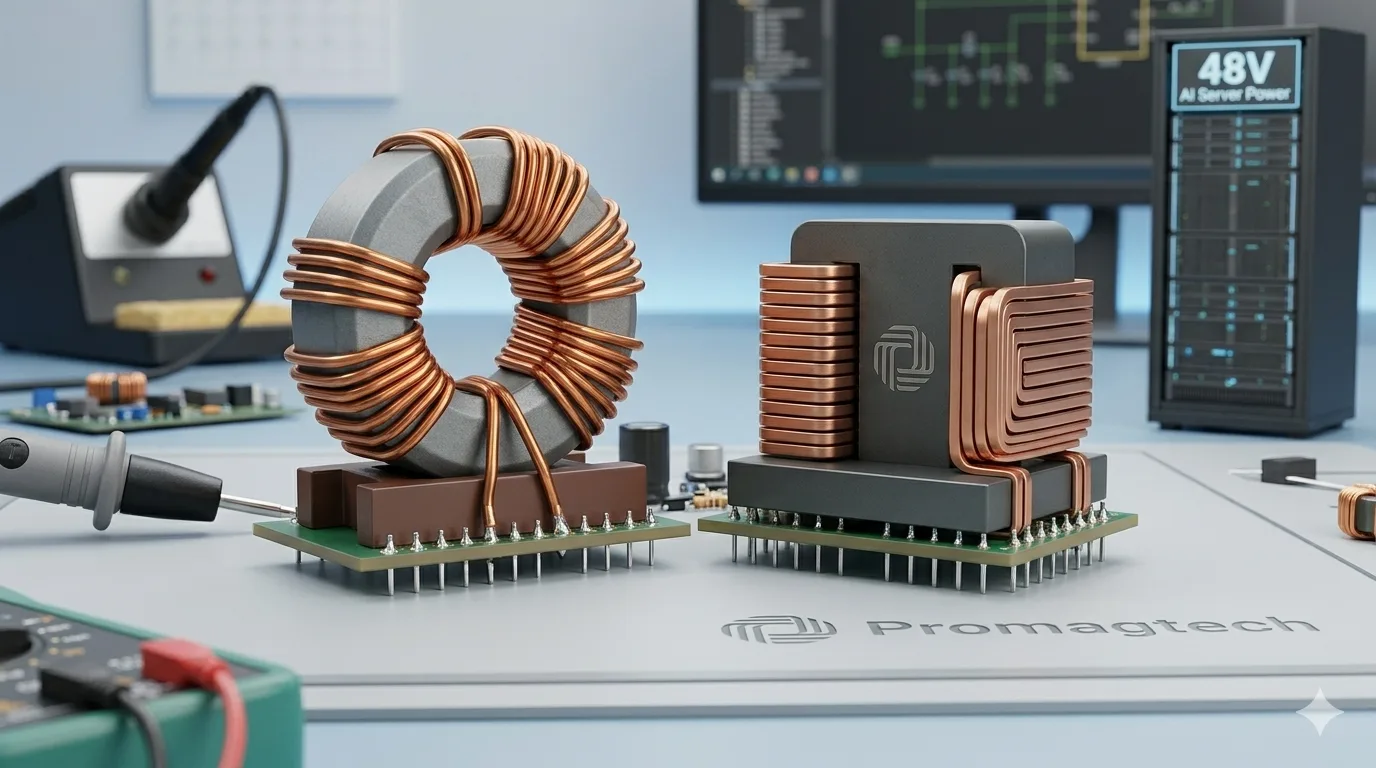
48 V AI Data Center Power: Why Circular Wire Inductors Hit Thermal Limits
Review thermal dead zones, high-frequency loss, window fill, and flat wire winding advantages for high-density 48 V AI server power architecture.
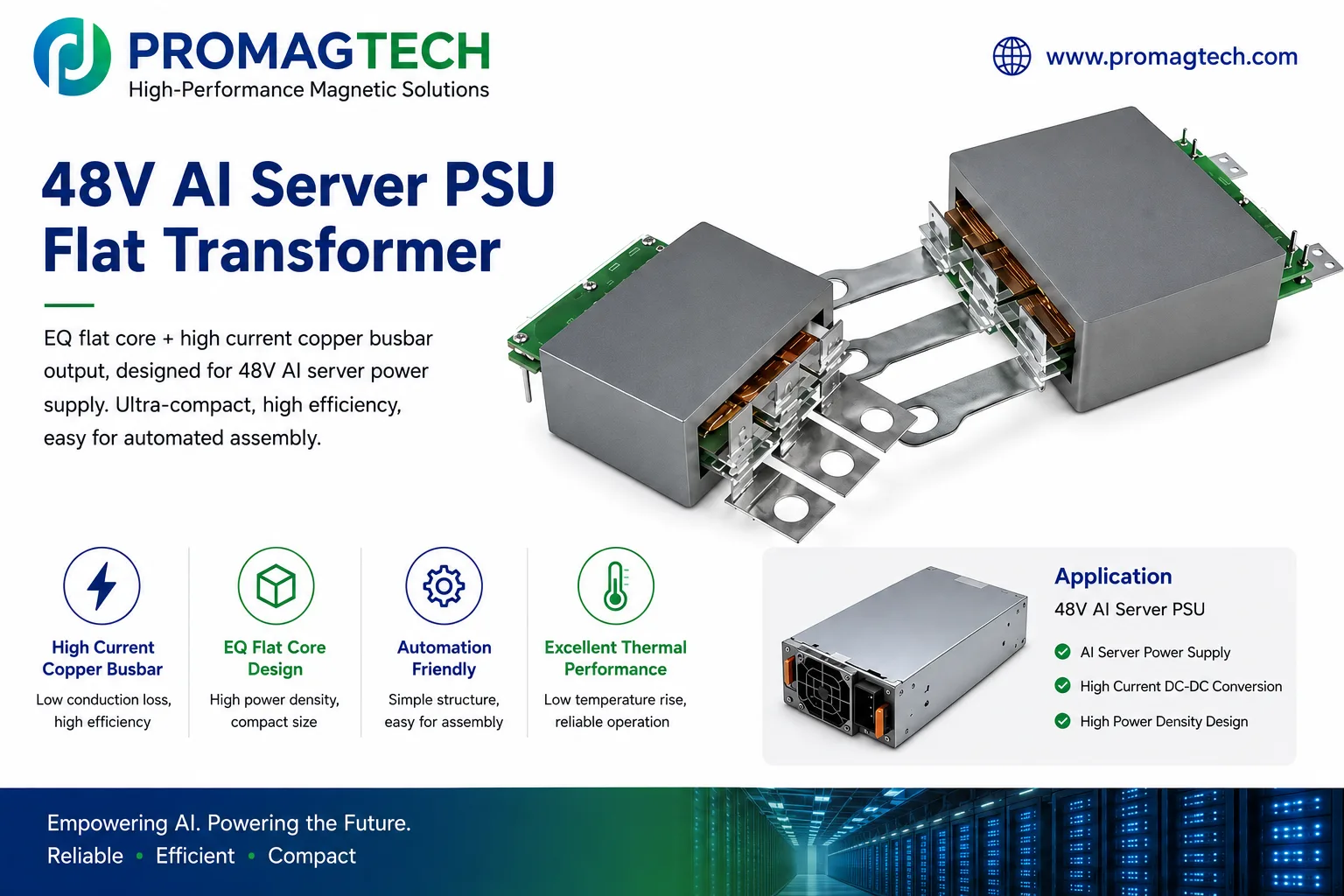
48 V AI Server PSU Flat Transformer Design Guide
Review EQ flat core design, high-current copper busbar output, compact structure, thermal path and automated assembly boundaries for 48 V AI server PSU designs.
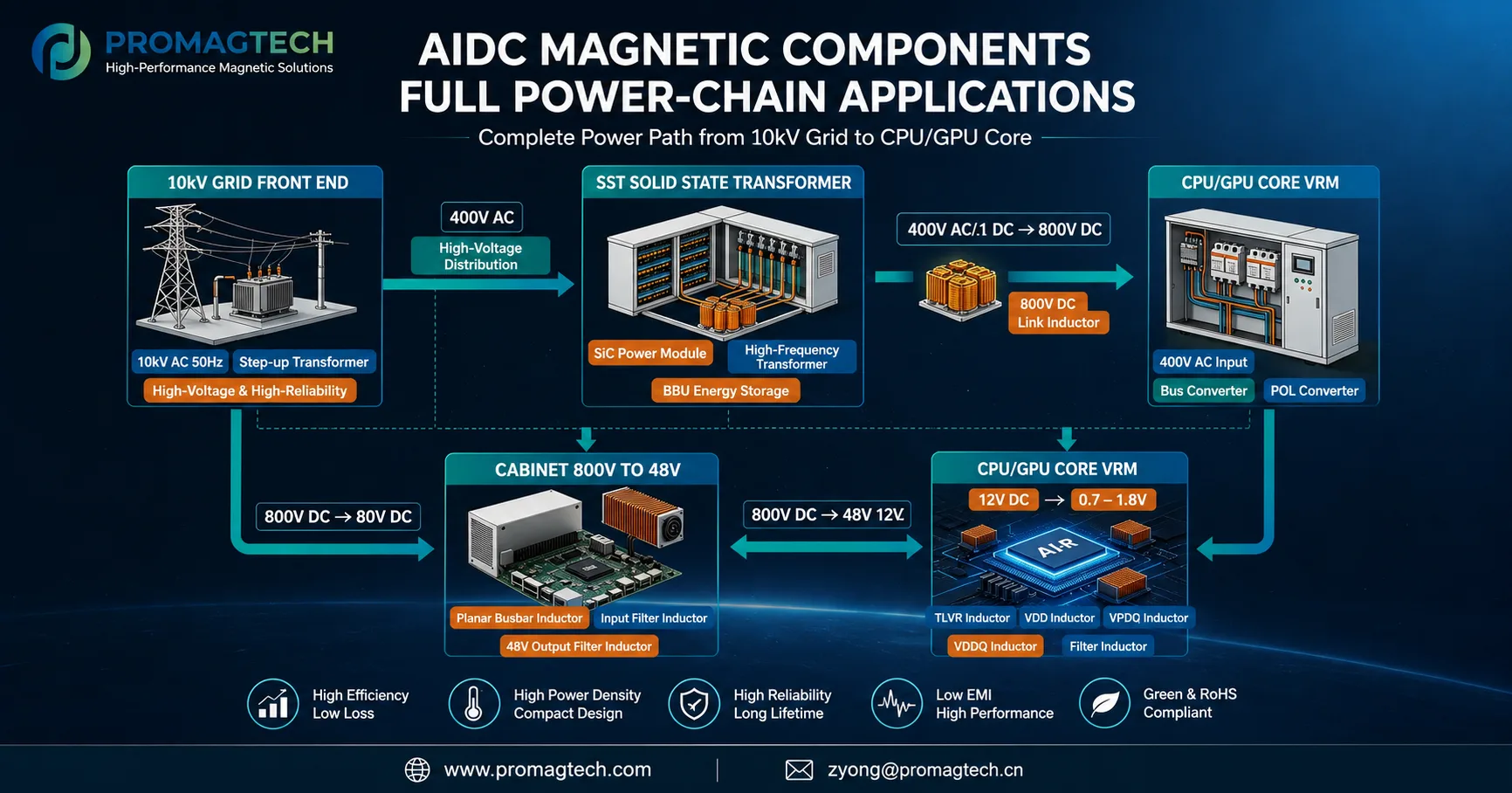
AIDC Magnetic Components Full Power-Chain Applications
Map magnetic component positions across the AIDC power path, including 10 kV grid input, SST, 800 V DC link, 800 V to 48 V conversion and CPU/GPU core VRM stages.
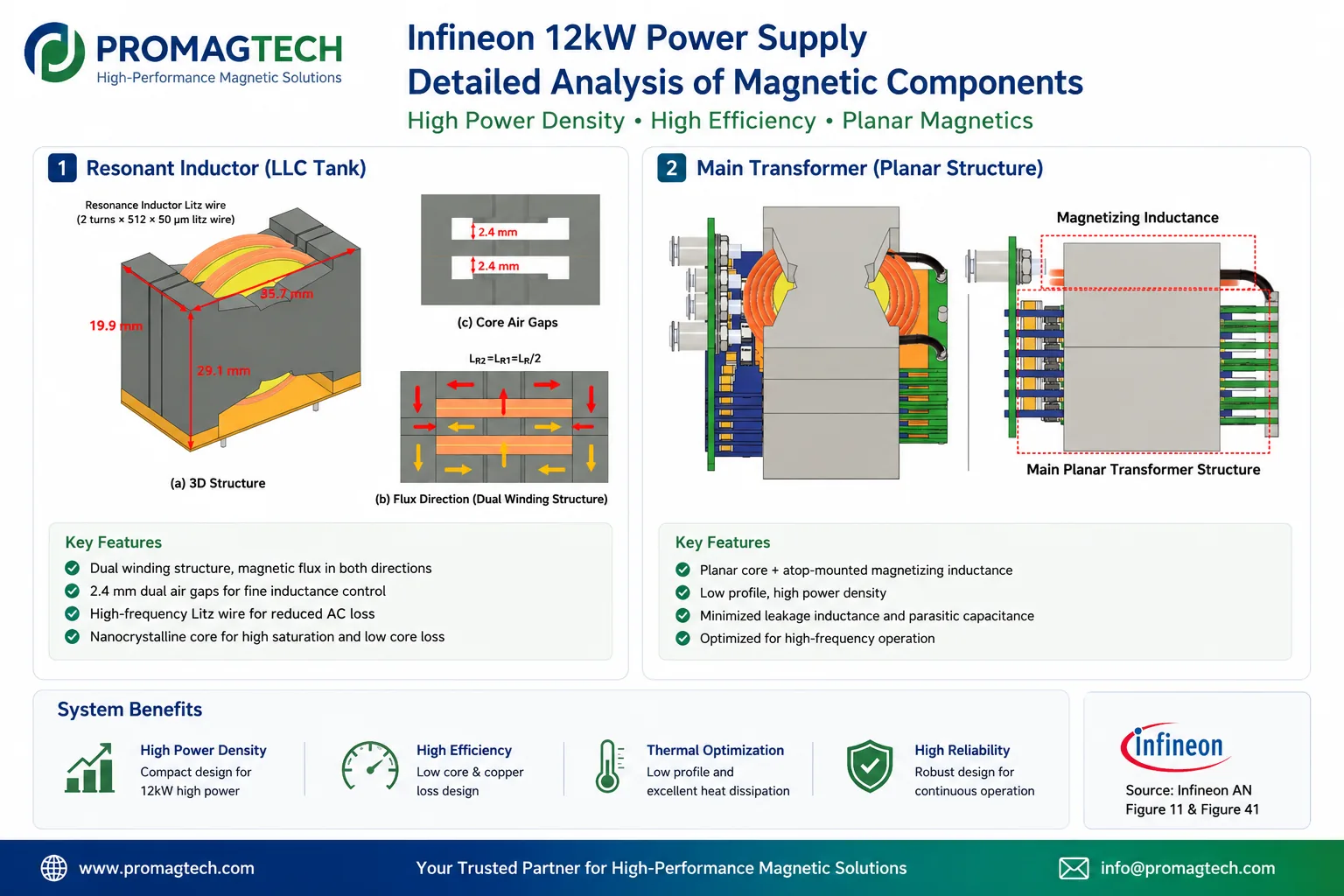
Infineon 12 kW AI-Server PSU Magnetics Analysis
Independent engineering commentary on the public reference architecture, covering hybrid planar transformers, external Lm/Lr, PFC inductors, EMI magnetics and manufacturing validation boundaries.
Reliability, Thermal and Testing
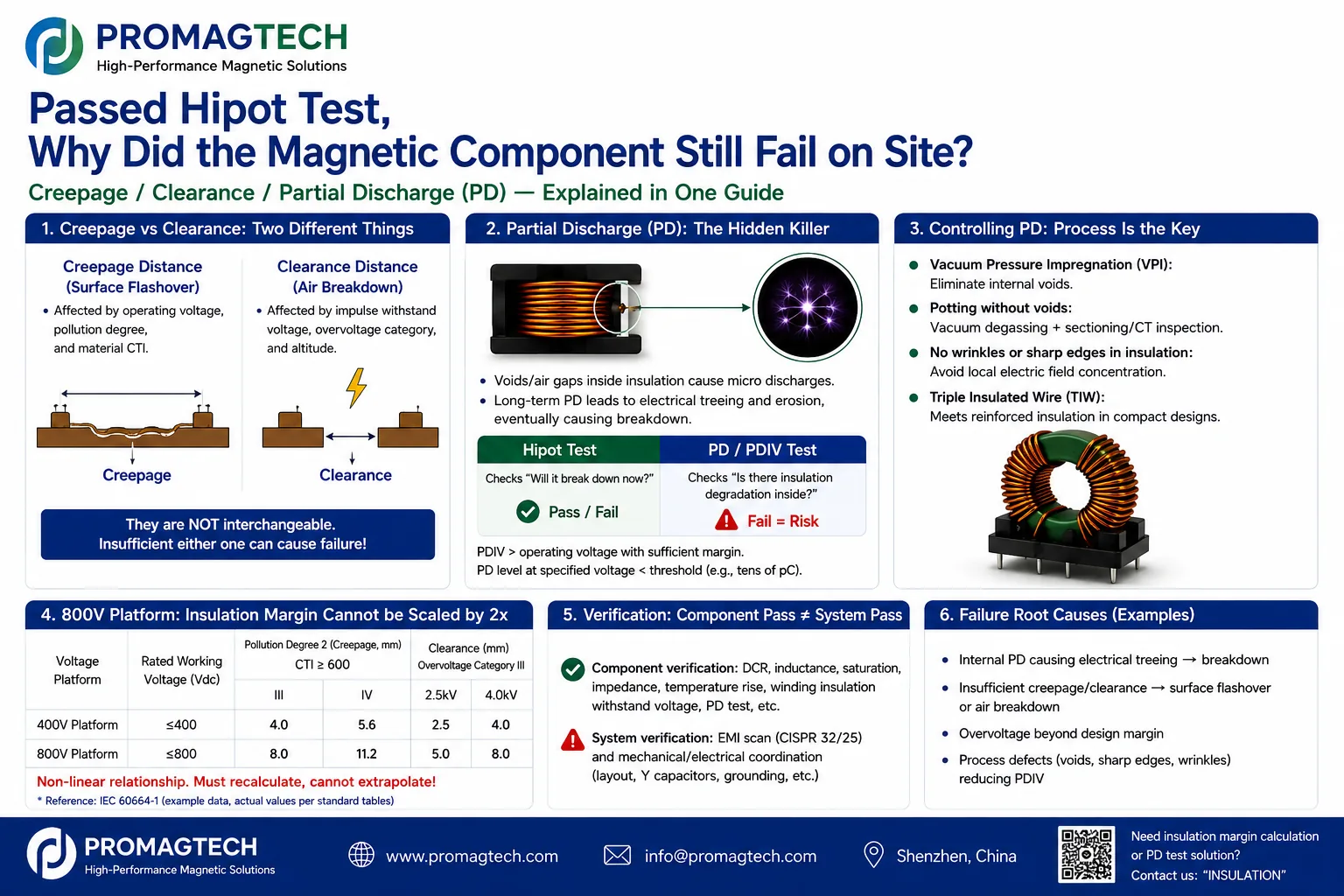
Insulation Design & Partial Discharge Testing: A Methodology for the 800 V Platform
Separate clearance, creepage and PD risk, then define reinforced insulation, process controls and a project-specific validation baseline.
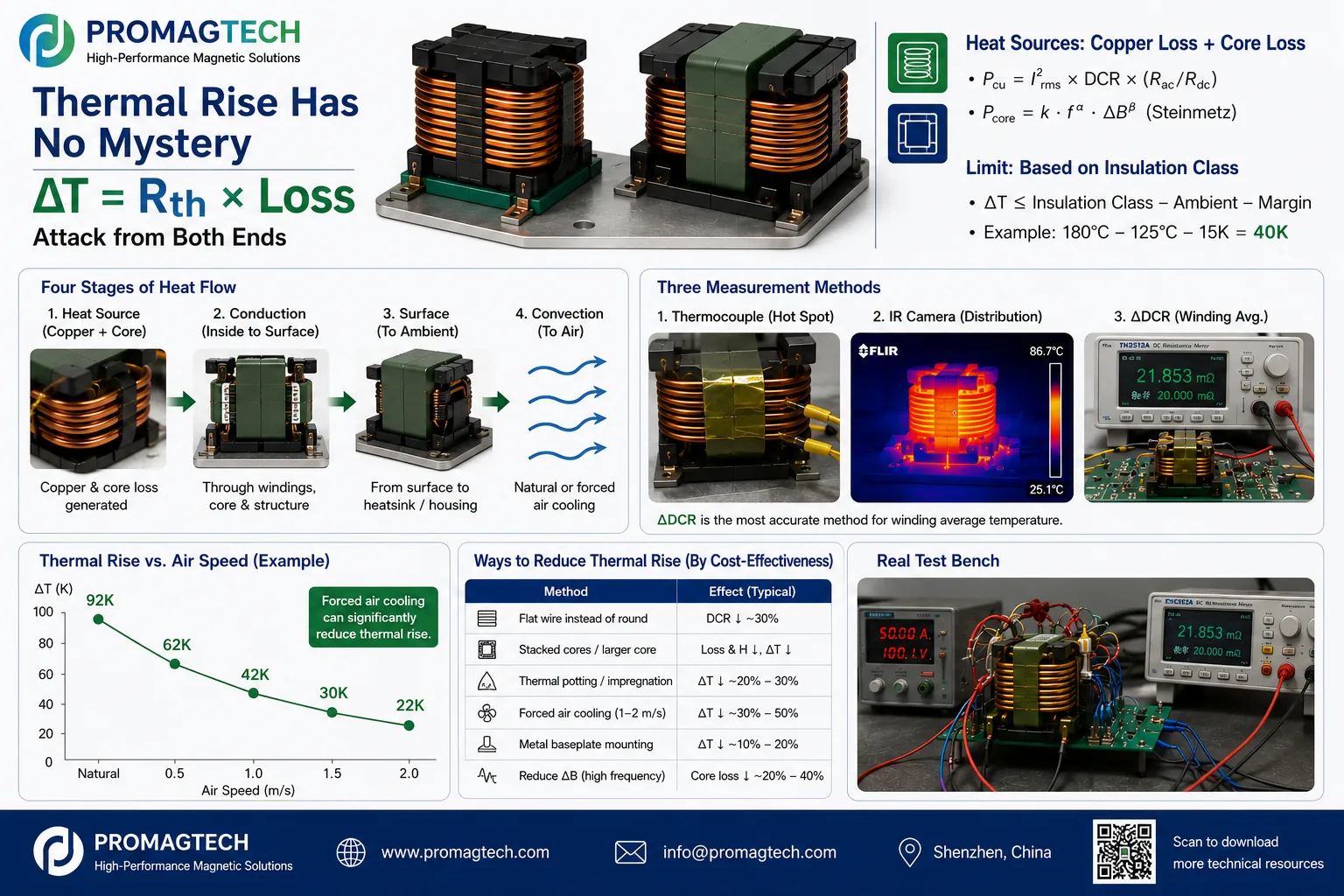
Thermal Design & Temperature-Rise Testing for High-Current Magnetics
Connect copper and core loss to the thermal path, ΔDCR winding-average measurement, hot-spot testing and a project-specific DVP baseline.
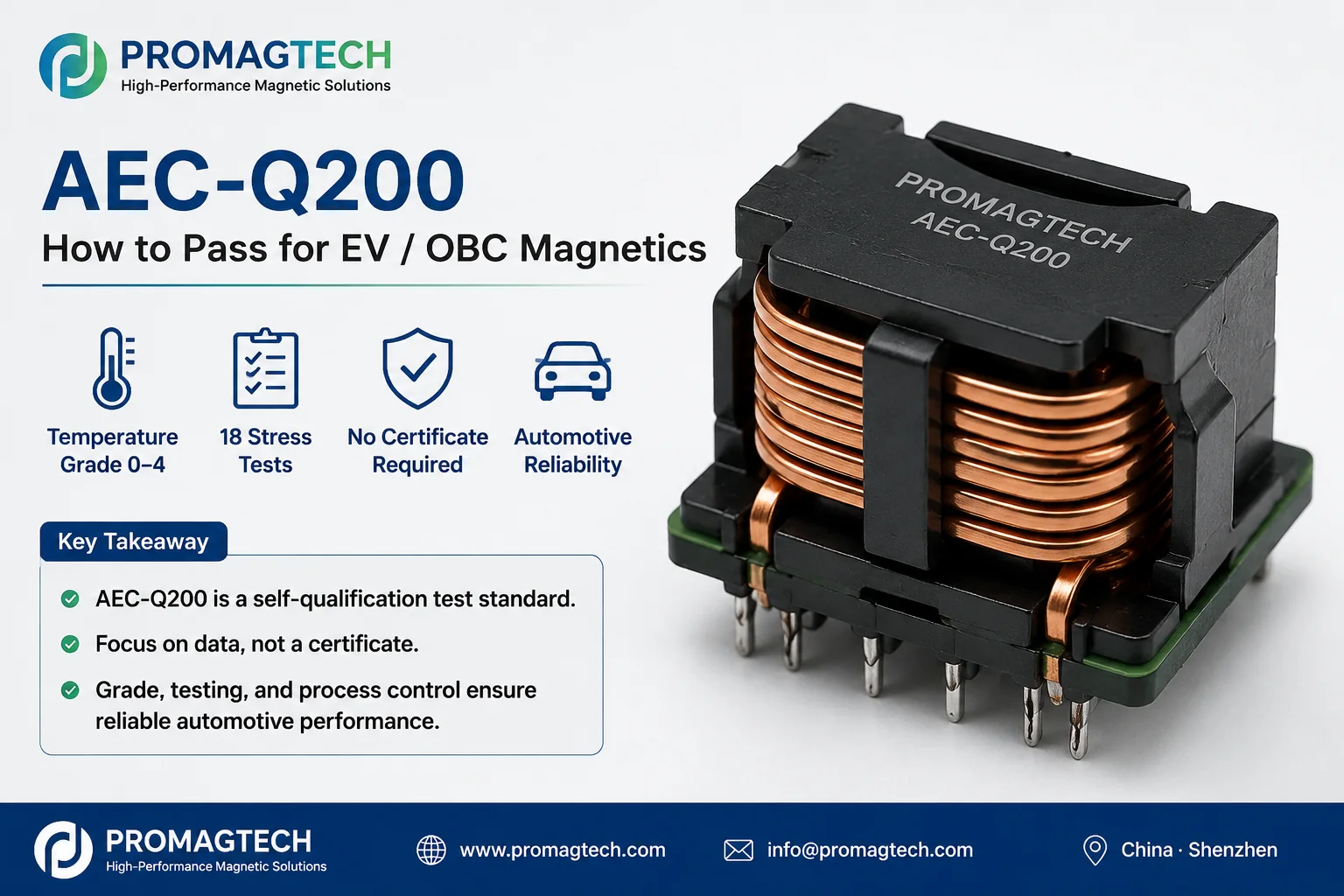
AEC-Q200 and Automotive Reliability for EV/OBC Magnetics
Review temperature grades, applicable stress tests, magnetics-specific risks, qualification reports, IATF 16949 and PPAP evidence boundaries.
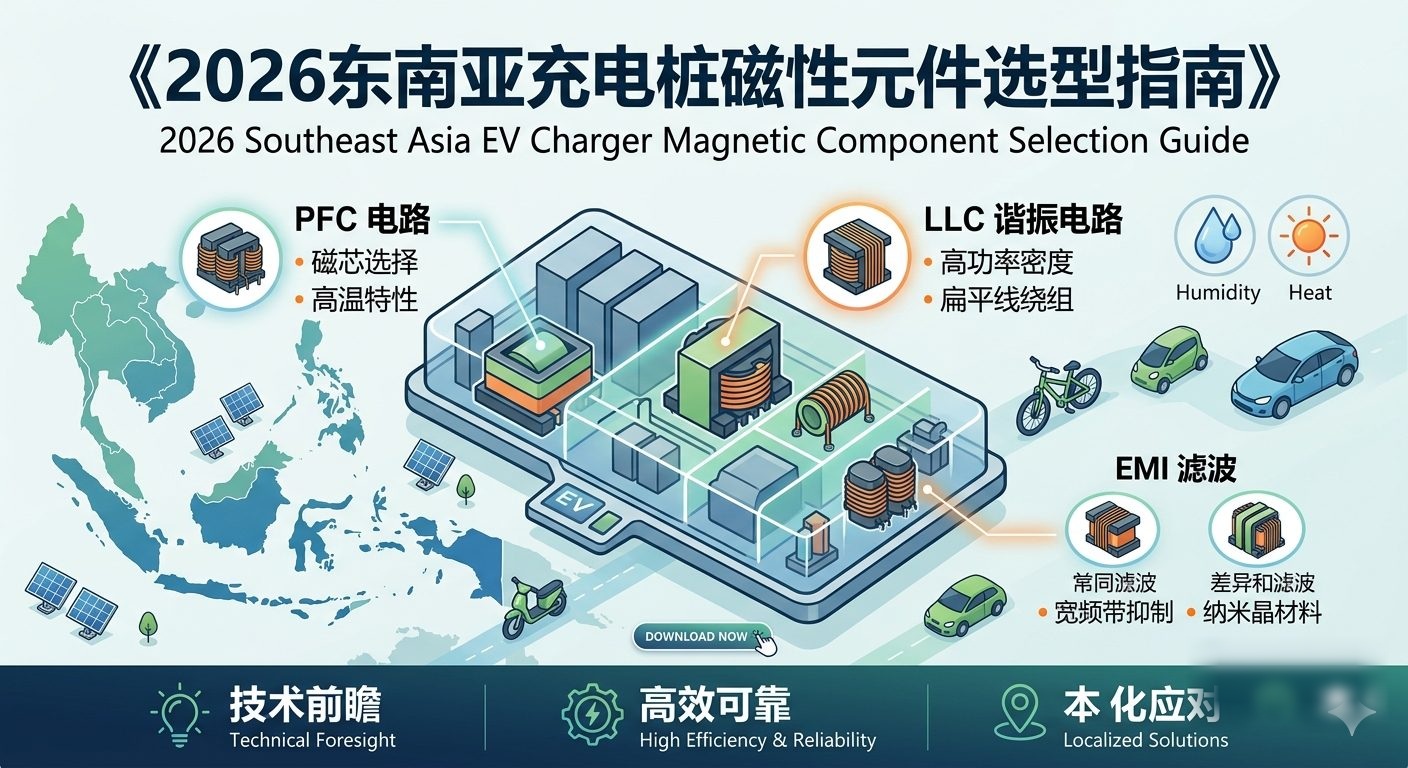
Southeast Asia EV Charger Reliability Design
Review ambient temperature, humidity, contamination, corrosion exposure, insulation, thermal path and validation conditions for EV charging equipment.